Home care after a stroke: private nursing at home in Orange County and Southern California
After a stroke, a registered nurse at home can give medicines as the doctor ordered, check blood pressure, watch swallowing, skin and walking, teach the family the warning signs of another stroke, and report changes to the doctor early. Diagnosis, prescribing and the therapy plan stay with the person's own physicians and therapists.
A stroke happens when blood flow to part of the brain stops (MedlinePlus). Most are caused by a blocked blood vessel, and some by bleeding in the brain (National Heart, Lung, and Blood Institute).
What can a stroke mean at home?
It depends on which part of the brain was affected. A stroke can cause muscle weakness or paralysis (NHLBI). MedlinePlus lists other problems families may see at home: tight muscles, trouble swallowing, trouble speaking or understanding, changes in thinking, memory and judgment, bladder and bowel problems, and depression (MedlinePlus, recovering after stroke). Some people recover fully, while others have long-term disabilities (NHLBI, stroke recovery).
Stroke, in Orange County and in the research
Why do swallowing problems matter so much?
Swallowing problems are common after a stroke. A University of Toronto review found rates from 37% to 78%, depending on how carefully swallowing was tested, and a higher risk of pneumonia in people with swallowing problems (Stroke, 2005). Food or liquid that goes into the lungs can cause aspiration pneumonia, and many people do not know they have aspirated (Cleveland Clinic). Signs to watch for include coughing or choking during or after eating, a gurgling sound in the throat, clearing the throat after drinking, and slow chewing (MedlinePlus). A speech therapist can help, and thickened liquids or pureed foods may be needed (MedlinePlus).
At meals, MedlinePlus suggests sitting up as straight as possible, taking small bites, chewing on the stronger side, not talking while swallowing, and staying upright for 30 to 45 minutes after eating. It says not to drink thin liquids without checking with the provider or therapist first, because thickened liquids may be recommended (MedlinePlus, swallowing problems).
Why are falls such a concern?
A stroke can cause muscle weakness or paralysis, which raises the risk of falling (NHLBI). Tight, spastic muscles add to it (MedlinePlus), and one side effect of blood pressure medicine is an increased risk of falls (MedlinePlus). In a 1995 study of 108 older stroke survivors living at home with some disability in Bradford, England, 79 (73%) fell in the six months after leaving the hospital (BMJ, 1995). That was a small, older study, so it does not describe every survivor. A University of Sydney review linked falls in people living at home after a stroke with balance and mobility problems, needing help with self-care, sedating medicines, thinking problems, depression and earlier falls (Archives of Physical Medicine and Rehabilitation, 2018).
What about medicines and bleeding?
After a stroke, doctors may prescribe medicines to control blood pressure or cholesterol and to keep blood from clotting, such as aspirin or clopidogrel, blood thinners like warfarin or newer anticoagulants, and statins. MedlinePlus says not to stop any of them, and not to take other medicines, supplements, vitamins or herbs without asking the provider first (MedlinePlus). The most common side effect of blood thinners is bleeding. NHLBI lists warning signs: blood in the urine, bright red or black tarry stools, vomit that is bright red or looks like coffee grounds, unexplained bleeding from the gums or nose, and unexplained bruising (NHLBI).
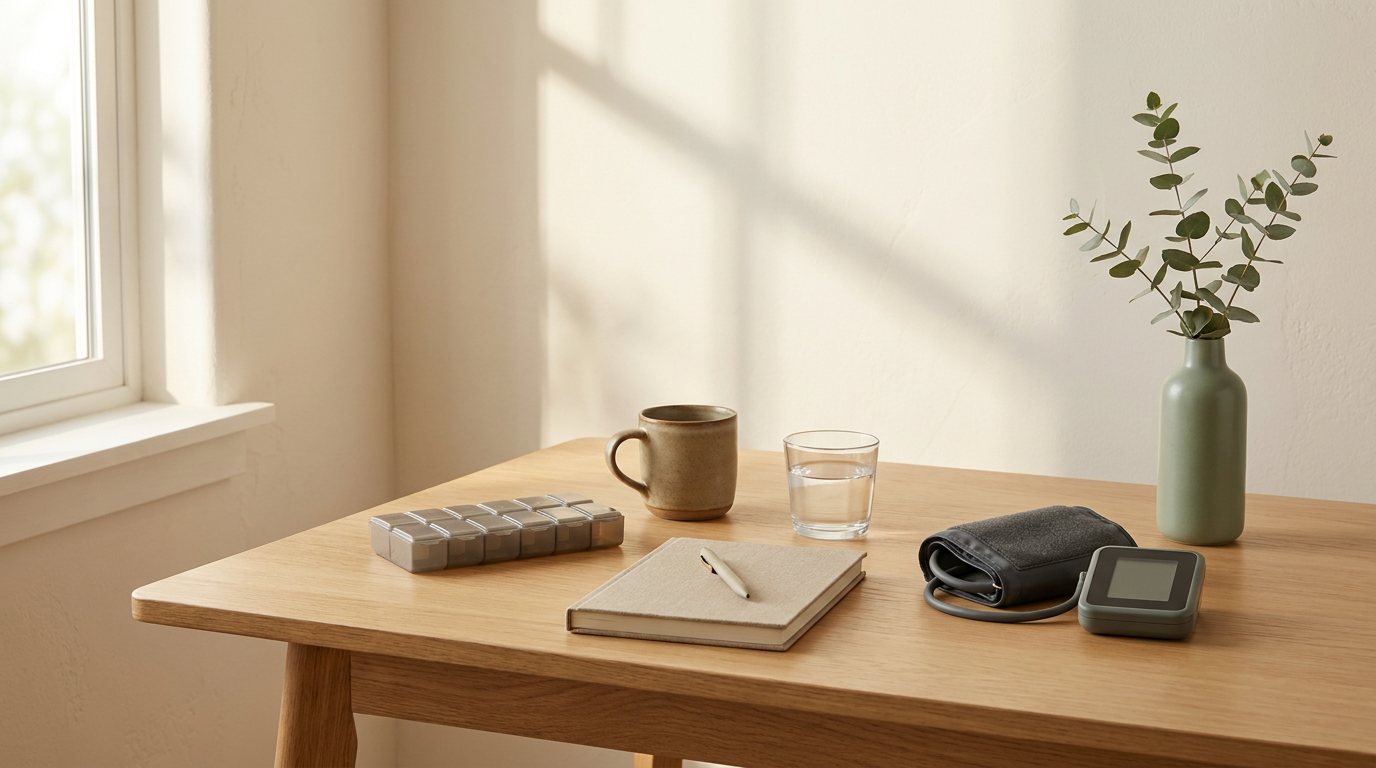
Blood pressure matters too. The provider may ask the family to check it at home with a well-fitting arm cuff, keep a written record, bring it to visits, and call if it goes well above the person's normal range (MedlinePlus). The goal is set for each person by their own provider.
What changes with speech, mood and thinking?
For aphasia, MedlinePlus suggests a quiet room, a lower voice, plenty of time to answer, yes or no questions, and short, simple steps (MedlinePlus). It also says to talk in adult language and not to pretend to understand (MedlinePlus, aphasia). Speech can take up to 2 years to recover, and not everyone recovers fully (MedlinePlus).
Depression is common and can start soon after a stroke or up to 2 years later (MedlinePlus). Some people have sudden laughing or crying that does not match how they feel, called pseudobulbar affect, which is often mistaken for depression (Cleveland Clinic). Fatigue is common as well: a University of Melbourne review put it at about half of survivors, with wide variation between studies (International Journal of Stroke, 2016). Changes in thinking, memory and judgment can mean more safety measures are needed at home (MedlinePlus).
What about skin, bladder and bowel?
MedlinePlus advises checking every day for pressure sores at the heels, ankles, knees, hips, tailbone and elbows (MedlinePlus), and changing position every 1 to 2 hours in bed (MedlinePlus, pressure injuries). A bladder or bowel schedule can help, and a commode near where the person sits most of the day can too (MedlinePlus).
Home safety and daily checklist after a stroke
Each step comes from a public health source. A therapist or nurse can look at the home and suggest changes (MedlinePlus).
Bathroom
- A bath chair or bench for showering (MedlinePlus)
- Real grab bars: towel racks cannot hold a person's weight (MedlinePlus)
- A bathroom or portable commode on the floor where the person spends most of the day (MedlinePlus)
Bedroom and walkways
- A low bed, so the feet touch the floor when sitting on the edge (MedlinePlus)
- Throw rugs, loose wires and cords removed, with good lighting from the bedroom to the bathroom (MedlinePlus)
- A cordless or cell phone kept with the person (MedlinePlus)
Mealtimes
- Sit upright, take small bites, and stay upright 30 to 45 minutes after eating (MedlinePlus)
- Use the liquid thickness the speech therapist recommended (MedlinePlus)
- Call the provider for coughing, fever, weight loss or worse swallowing (MedlinePlus)
Medicines, skin and blood pressure
- Medicines exactly as prescribed, and nothing new without asking (MedlinePlus)
- A written blood pressure log if the provider asks for one (MedlinePlus)
- A daily skin check of heels, hips, tailbone and elbows (MedlinePlus)
What does a private nurse do for a stroke patient at home?
A private nurse at home after a stroke monitors blood pressure, swallowing, skin and walking, helps keep medicines on the schedule the doctor set, teaches the family the warning signs of another stroke, and reports changes to the doctor early. Diagnosis, prescribing and therapy plans stay with the person's physicians and therapists.
California's Board of Registered Nursing describes RN work as observing signs and symptoms, judging whether they are abnormal, then reporting, referring or starting emergency procedures, and giving medicines ordered by a physician or other authorized prescriber (California BRN). Diagnosing and prescribing belong to the person's physician, nurse practitioner or other licensed prescriber. Therapy, such as physical, occupational and speech therapy, is ordered by the care team. After a stroke, the nursing role at home looks like this:
- Monitor blood pressure, swallowing, skin, walking and transfers, mood and new confusion, so changes are noticed early.
- Help keep medicines on the schedule the doctor set, and help the family set up a safer home, starting with the bedroom and bathroom.
- Coordinate one current medicine list across the neurologist, the primary doctor and every other prescriber, and keep therapy and follow-up visits on track.
- Teach the family the warning signs of another stroke, safer ways to eat and drink, and the home exercises and transfer steps the therapists chose.
- Report changes to the doctor, such as new falls, choking or coughing when eating, skin sores, or blood pressure well above the usual range (MedlinePlus).
- Advocate for the person at appointments and during any hospital stay, with the medicine list and history in hand.
For the differences between an RN, an LVN, a nursing assistant and a caregiver in California, see who can legally do what.
How do WholeHealth Concierge nurses help after a stroke?
Our nurses support stroke survivors with medication management, swallowing precautions and safe mobility, and we teach families how to spot warning signs.
- Medicines on schedule. Medicines given as the doctor ordered, with one current list kept across every prescriber.
- Swallowing precautions. Meals and drinks given the way the speech therapist recommended, with coughing or choking reported to the doctor.
- Safer moving at home. Help with transfers, walking and getting to the bathroom, following the plan the therapists set.
- Watching for changes. Blood pressure, skin, mood and new symptoms, reported to the person's neurologist or primary doctor.
- Nights covered. Overnight or 24-hour nursing when nights get hard.
- Teaching the family. The warning signs of another stroke, what to watch for, and who to call.
Whether you need a few visits or ongoing care, we adjust the level and length of support to fit you or your loved one. Diagnosis and prescribing stay with the person's doctors and nurse practitioners, and therapy stays with their therapists.
Related: overnight and 24-hour nursing, RN care management, private duty nursing and how many hours of care someone needs.
Home health, private duty nursing or home care: which do you need after a stroke?
They are different services, and many families use more than one. Medicare home health is part-time skilled care on a provider's order. Private duty nursing is nursing for the hours the family chooses, paid privately. Non-medical home care helps with daily living.
| Medicare home health | Private duty nursing | Non-medical home care | |
|---|---|---|---|
| What it is | Part-time or intermittent skilled nursing and therapy for people who are homebound (Medicare.gov) | Licensed nurses for the hours you choose, from short visits to overnight or 24-hour care | Help with bathing, dressing, meals, transfers and company |
| Hours | In most cases up to 8 hours a day combined, and 28 hours a week (Medicare.gov) | Set by the family and the care plan | Set by the family |
| How it starts | A doctor or provider sees the person, orders the care, and a Medicare-certified agency provides it (Medicare.gov) | A call to the provider; the care plan follows the doctor's orders | A call to the provider |
| Who pays | You pay nothing for covered home health services (Medicare.gov) | Private pay, or long-term care insurance if the policy covers it | Private pay; Medicare does not pay for personal care when it is the only care needed (Medicare.gov) |
Medicare does not pay for 24-hour care at home (Medicare.gov), and it does not pay for long-term custodial care (Medicare.gov). Medicare Advantage members should check with their plan. For what care costs and how families pay, see the cost of care after a stroke, long-term care insurance for home nursing and how to pay for in-home care in California.
The team at home after a stroke
Sources: California BRN; Medicare.gov; our guide to who can legally do what in California (Business and Professions Code sections 2725 and 2859).
What about inpatient rehab or a skilled nursing facility first?
Some people go from the hospital to rehab before coming home. An inpatient rehabilitation facility is for people who need intensive rehabilitation, physician supervision and coordinated care (Medicare.gov); under CMS rules that program generally means at least 3 hours of therapy a day, at least 5 days a week (CMS Medicare Benefit Policy Manual). Medicare covers a skilled nursing facility stay after an inpatient hospital stay of at least 3 days in a row, when the doctor decides daily skilled care is needed, for up to 100 days in each benefit period (Medicare.gov). The hospital's discharge team helps decide which fits. See rehab or home after the hospital.
What should the first week home after a stroke look like?
Plan before the discharge day. MedlinePlus says rehabilitation most likely begins within 24 to 48 hours after the stroke (MedlinePlus, stroke rehabilitation), and the work carries on at home.
The first week home
- Before discharge:Get the medicine list, the follow-up appointments, the therapy orders and the swallowing plan in writing.
- Day one:Set up the bed and bathroom so they are easy to reach, and remove throw rugs and loose cords.
- Every day:Medicines exactly as prescribed, a skin check, the mealtime steps, and a blood pressure log if asked.
- This week:Keep follow-up and therapy visits, and decide who stays the first nights.
Sources: MedlinePlus, stroke discharge; MedlinePlus, recovering after stroke; MedlinePlus, blood pressure.
Use our discharge checklist, the printable medication list and getting the home ready. MedlinePlus also says not to drive without the provider's permission (MedlinePlus).
Does a stroke patient need 24-hour care, and when can they be left alone?
There is no single rule. It depends on whether the person can get up and to the bathroom safely, swallow safely, take medicines correctly, recognize a problem and call for help, and get through the night. Changes in thinking and judgment can mean more safety measures are needed (MedlinePlus), and a phone should stay within reach (MedlinePlus). The therapists and doctor who know the person are the right people to ask, and the answer can change as recovery goes on.
Families often start with visits or day shifts and add overnight care when nights are the hard part. See can my loved one safely live alone, how many hours of care are needed and overnight, 24-hour and live-in nursing.
What are the warning signs of another stroke?
Learn BE FAST and keep it where everyone can see it. If you see any of these signs, call 911 right away and note the time the symptoms started. Do not wait to see if they go away, and call even if they get better after a few minutes (Cleveland Clinic).
Signs of a stroke
Source: Cleveland Clinic, stroke. Also see CDC, signs and symptoms of stroke.
Call an ambulance rather than driving, so treatment can begin on the way to the emergency room (NHLBI). Cleveland Clinic notes that another stroke has an even higher risk of causing severe complications (Cleveland Clinic). Taking medicines as prescribed, controlling blood pressure and diabetes, and not smoking are part of preventing it (MedlinePlus; MedlinePlus).
When should you call the doctor, and when should you call 911?
Each line comes from a public health source. Ask the person's own doctor which changes they want to hear about first. These lists are examples, not every emergency. In any emergency, call 911.
Call the doctor
- Recent falls, or new trouble getting out of bed or a chair (MedlinePlus)
- Choking or coughing when eating, fever, weight loss, or swallowing getting worse (MedlinePlus; MedlinePlus)
- Skin sores or redness, or pain that is getting worse (MedlinePlus)
- Signs of a bladder infection: fever, burning when urinating, or frequent urination (MedlinePlus)
- Bleeding signs on a blood thinner, such as blood in the urine or stool, or unexplained bruising: call right away (NHLBI)
- Blood pressure well above the person's normal range (MedlinePlus)
- Feeling very sad or stressed all the time (MedlinePlus)
Call 911 now
- Any BE FAST sign, or sudden new numbness or weakness of the face, arm or leg, blurry vision, trouble speaking or understanding, dizziness or loss of balance, or a severe headache (MedlinePlus)
- Severe bleeding (NHLBI)
- Chest pain, fever and difficulty breathing: pneumonia can get worse quickly (Cleveland Clinic)
- Signs of a blood clot in the lung, such as chest pain, shortness of breath, coughing blood or fainting (Cleveland Clinic)
- Signs of a heart attack, or a seizure (Cleveland Clinic)
After a stroke, call 911 for symptoms that come on suddenly or are new, even if they pass (MedlinePlus; Cleveland Clinic).
How long does stroke recovery take at home?
Every stroke is different. MedlinePlus says problems with moving, thinking and talking often improve in the first weeks or months, and some people keep improving for months or years (MedlinePlus). NHLBI says recovery can take weeks, months or even years (NHLBI), and Cleveland Clinic says most people take a few months, with no one timeline that fits everyone (Cleveland Clinic).
What public health sources say about timing
- The first days:Rehabilitation most likely begins within 24 to 48 hours after the stroke.
- The first weeks and months:Problems with moving, thinking and talking often improve.
- Months to years:Some people keep improving for months or years.
- Up to 2 years:Speech can take up to 2 years to recover, and not everyone recovers fully.
Sources: MedlinePlus, stroke rehabilitation; MedlinePlus, recovering after stroke; NHLBI.
In the Copenhagen Stroke Study of 1,197 patients in the 1990s, 80% reached their best level of basic daily activities within 6 weeks and 95% within about 12.5 weeks, with longer times after more severe strokes (Archives of Physical Medicine and Rehabilitation, 1995). That study is old and measured basic daily activities only, so it does not cap anyone's recovery.
What does the research say about care after a stroke?
We did not find a study of private duty nursing after a stroke, so we do not promise outcomes. In studies of related programs, results were mixed: several trials found no difference on their main measure, and a Cochrane review found benefits only with a well-resourced, coordinated team.
We read the studies so families can see what is known, and what is not. Each finding below is from the published abstract.
Five findings worth knowing
- Transitional care, U.S. (COMPASS):A trial led by Wake Forest with UNC and Duke, in 40 North Carolina hospitals and 6,024 patients, found no effect on daily function at 90 days, and a follow-up found no difference in readmissions. More people checked their blood pressure at home (72% vs 64%). Circulation: Cardiovascular Quality and Outcomes, 2020; JAHA, 2021
- Early supported discharge (Cochrane):A University of Glasgow review of 17 trials found that well-resourced teams with coordinated input from several professions, for selected patients, shortened hospital stays and reduced long-term dependency. Results were inconclusive without that coordinated team. Cochrane, 2017
- Training family caregivers:A London trial of 300 patients found that training caregivers during rehab lowered caregiver burden. A larger trial in 36 UK stroke units found no difference. BMJ, 2004; The Lancet, 2013
- Falls at home:A multifactorial falls program for people going home after stroke rehab did not reduce falls in a 156-person Australian trial. Archives of Physical Medicine and Rehabilitation, 2012
- Readmission:Across U.S. hospitals from 2010 to 2015, about 11% to 14% of stroke patients were readmitted within 30 days, depending on the type of stroke. JAMA Network Open, 2018
Each study is listed with its link in the sources below.
What this means for families. The first weeks home carry real risks, from falls and swallowing problems to a return trip to the hospital. What a nurse at home offers is attention: watching for the changes the research describes, following the care plan, teaching the family, and calling the doctor early.
How can families and caregivers get support after a stroke?
Most people who have had a stroke depend on family and friends for help with daily activities (The Lancet, 2013). Caregiving can be rewarding, and it can also be stressful and sometimes overwhelming (MedlinePlus, caregivers). The National Institute on Aging lists signs of caregiver stress, such as feeling exhausted, overwhelmed or anxious, trouble sleeping, and feeling sad or hopeless. Its advice: do not wait until you are completely overwhelmed, and tell your own doctor that you are a caregiver (National Institute on Aging).
MedlinePlus suggests family counseling, visiting nurses or aides, adult day care and local aging services, and planning ahead with advance directives and power of attorney (MedlinePlus). Sharing the hours, so one person is not on call every night, is one way a private nurse can help.
See also: when family members disagree, caring from out of state, family advocacy.
Where are Orange County's stroke hospitals, rehab programs and support groups?
Orange County hospitals that describe themselves as stroke centers include Hoag, UCI Health, Providence Mission Hospital, Providence St. Joseph Hospital and MemorialCare Saddleback Medical Center. Hoag, UCI Health and Providence Mission Hospital run inpatient rehabilitation, and Hoag and Saddleback host monthly stroke support groups.
Each was checked on its own website on October 24, 2026, and is described in its own words. Check the current schedule before you go. WholeHealth Concierge is not affiliated with these hospitals or organizations.
In Orange County, the county emergency medical services agency designates Stroke-Neurology Receiving Centers that take 911 patients with stroke signs (OC EMS Policy 650.00).
Hospital stroke centers, as each hospital describes itself
- Hoag (Newport Beach and Irvine): Hoag says its Newport Beach hospital is a DNV certified Comprehensive Stroke Center and its Irvine hospital a DNV certified Primary Stroke Center.
- UCI Health, Orange: UCI Health says it is Orange County's first Joint Commission certified comprehensive stroke center. It lists UCI Health, Los Alamitos as a DNV designated Comprehensive Stroke Center.
- Providence Mission Hospital (Mission Viejo): the hospital says it was named a Comprehensive Stroke Center by The Joint Commission.
- Providence St. Joseph Hospital (Orange): the hospital lists Joint Commission Advanced Primary Stroke Center certification.
- MemorialCare Saddleback Medical Center (Laguna Hills): the hospital says it is a Joint Commission Thrombectomy-Capable Stroke Center.
Inpatient rehabilitation
- Hoag Fudge Family Acute Rehabilitation Center (Newport Beach): a 24-bed center for adults treated for stroke and other conditions, with therapy at least three hours a day.
- UCI Health, Irvine Rehabilitation Hospital: a 52-bed rehabilitation hospital that opened in August 2026 for patients recovering from stroke, traumatic brain injury and spinal cord injury.
- Providence Mission Hospital Acute Rehabilitation Unit (Mission Viejo): its inpatient programs include a CARF accredited Stroke Specialty program.
Support and local services
- Hoag Stroke Hybrid Support Group: for stroke survivors, caregivers, family and friends, on Zoom on the 4th Thursday of the month. Information: (949) 764-3623.
- Saddleback Stroke Survivor Support Group: a virtual group on the third Tuesday of the month; details are on the stroke center page.
- Caregiver Resource Center OC: free services for family caregivers of a frail adult over 60 or an adult with a brain-impairing condition, including consultation, care planning, counseling, support groups and respite. 800-543-8312.
- OC Office on Aging: an information and assistance line for older adults, (714) 480-6450.
- OC ACCESS (OCTA paratransit): eligibility is based on functional ability, not a diagnosis. (714) 560-5956.
- In-Home Supportive Services, Orange County: for people who are disabled, blind or 65 and older and cannot live at home safely without help; it requires a Medi-Cal eligibility determination (California Department of Social Services).
We serve Orange County, including Newport Beach, Irvine, Mission Viejo, Laguna Woods, Lake Forest, Costa Mesa, Tustin, Huntington Beach and Anaheim, plus Los Angeles, Riverside and San Bernardino counties.
Home care after a stroke, answered.
The questions families type most often, with a source for each health answer.
How do you care for a stroke patient at home?
Give medicines exactly as prescribed, make the bed and bathroom easy and safe to reach, follow the swallowing plan at every meal, check the skin every day, keep therapy and follow-up visits, and learn BE FAST. MedlinePlus sets out each step in its stroke discharge guide, gathered in the checklist above.
Does Medicare cover in-home care after a stroke?
Partly. Medicare.gov says Medicare covers part-time or intermittent skilled nursing and therapy at home for people who are homebound, when a provider orders it and a Medicare-certified agency provides it, in most cases up to 8 hours a day and 28 hours a week. It does not pay for 24-hour care at home, or for personal care when that is the only care needed. See the cost of care after a stroke.
Does Medicare pay for a private duty nurse or 24-hour care after a stroke?
Medicare.gov lists 24-hour care at home among the things Medicare does not pay for, and says a person will not qualify for home health if they need more than part-time or intermittent skilled care. Private duty nursing is usually paid privately, or by long-term care insurance if the policy covers it. See does Medicare cover private duty nursing.
Do stroke patients need 24-hour care?
Some do, and many do not. It depends on whether the person can move and use the bathroom safely, swallow safely, take medicines correctly, and get through the night. Changes in thinking and judgment can mean more safety measures are needed (MedlinePlus). Ask the therapists and doctor, and look again as recovery goes on. See overnight, 24-hour and live-in nursing.
When can a stroke patient be left alone?
When they can move and use the bathroom safely, take medicines correctly, recognize a problem and call for help. MedlinePlus suggests keeping a cordless or cell phone with the person. Start with short periods, and ask the therapists what they think. See can my loved one safely live alone.
What is the difference between home health and private duty nursing?
Medicare home health is part-time skilled care for people who are homebound, ordered by a provider and given by a Medicare-certified agency (Medicare.gov). Private duty nursing is nursing for the hours the family chooses, including nights and 24-hour care, usually paid privately. Many families use both. See concierge nursing vs. home health.
Should we hire an RN, an LVN or a caregiver after a stroke?
It depends on the medical needs. In California, an RN observes and judges whether symptoms are abnormal, reports them, and gives medicines ordered by a prescriber (California BRN). An LVN works under the direction of an RN or physician, and a caregiver helps with daily living but may not practice nursing. See who can legally do what in California, and check any nurse's license with the Board of Registered Nursing.
How soon can private nursing start after a hospital or rehab discharge?
Call before the discharge day if you can, so the care plan and hours are in place when the person comes home. WholeHealth Concierge starts with a complimentary 15-minute phone consultation. See hospital discharge planning.
What should we have ready before a stroke patient comes home?
The medicine list, follow-up appointments, therapy orders and swallowing plan in writing; a bed and bathroom that are easy to reach; throw rugs and loose cords removed; good lighting from the bedroom to the bathroom; a shower chair; and a phone the person can reach (MedlinePlus; MedlinePlus; MedlinePlus). Use our discharge checklist.
How do you prevent falls after a stroke?
No single step guarantees it. In one Australian trial, a multifactorial falls program for people going home after stroke rehab did not reduce falls (2012 trial). MedlinePlus advises a low bed, clear and well-lit paths, standing up slowly while holding something stable, and telling the provider about any fall or near fall. See what to do when a loved one falls.
What should we do if a stroke patient coughs or chokes when eating?
Follow the speech therapist's plan, and call the provider for coughing, fever, shortness of breath, weight loss, or swallowing that is getting worse (MedlinePlus). If the person cannot speak or is having a hard time breathing, have someone call 911 while you begin first aid (MedlinePlus).
What are the signs of a second stroke?
The same as a first stroke. Use BE FAST: balance, eyes, face, arms, speech, time (Cleveland Clinic). Also watch for sudden numbness or weakness, blurry vision, trouble speaking or understanding, dizziness, or a severe headache (MedlinePlus). Call 911 right away, even if the signs go away.
How long does stroke recovery take for an older adult?
There is no set timeline. Problems with moving, thinking and talking often improve in the first weeks or months, and some people keep improving for months or years (MedlinePlus). Speech can take up to 2 years. Recovery differs with the type and size of the stroke and the person's health.
Can a nurse stay overnight with a stroke patient?
Yes. A private duty nurse can stay overnight to help the person get to the bathroom safely, give the medicines the doctor ordered on schedule, watch for new symptoms, and call 911 or report changes to the doctor. WholeHealth Concierge offers overnight and 24-hour nursing. See overnight, 24-hour and live-in nursing.
How much does in-home care after a stroke cost?
It depends on the hours and the level of care. Our guide to the cost of care after a stroke covers sourced market figures and what Medicare and insurance pay. In a complimentary consultation we work through the hours with you.
Was it a mini-stroke (TIA) or a stroke?
You cannot tell at home. TIA symptoms usually go away within an hour, though they can last up to 24 hours, and because you cannot tell a TIA from a stroke, MedlinePlus says to go to the hospital right away. Cleveland Clinic says a TIA is often a warning sign that a stroke is possible or likely. Call 911 rather than driving, so treatment can begin on the way (NHLBI).
Why is a stroke patient sleeping so much?
Fatigue is common after a stroke. A University of Melbourne review put it at about half of survivors, with wide variation between studies (International Journal of Stroke, 2016). Tell the doctor about changes in sleep or energy, and call 911 for sudden new symptoms such as trouble speaking or understanding (MedlinePlus).
Why is a stroke patient angry or acting differently?
Behavior, judgment and mood can change after a stroke, and mood may change quickly (NHLBI). Some people have sudden laughing or crying that does not match how they feel, called pseudobulbar affect, which is often mistaken for depression (Cleveland Clinic). Tell the doctor what you are seeing.
How common is depression after a stroke?
Common. A University of Sydney led review of 61 studies found depression in about 31% of people after a stroke (International Journal of Stroke, 2014). It can start soon after the stroke or up to 2 years later, and treatment can include more social activity, medicine and counseling (MedlinePlus). Talk with the provider.
What if a stroke patient refuses to take their medicine?
Tell the provider the person is refusing, and what they say about why. Any change is the provider's call: MedlinePlus says not to stop stroke medicines, and NHLBI says not to change the amount or skip a dose without talking to the provider. A nurse can keep one current medicine list and report problems early.
How do you prevent bed sores after a stroke?
Change position every 1 to 2 hours in bed, shift weight every 15 to 20 minutes in a wheelchair, and check the skin every day (MedlinePlus). Call the provider for a sore or redness that lasts more than a few days, or that becomes painful, warm or starts to drain (MedlinePlus).
How do you talk with someone who has aphasia after a stroke?
Use a quiet room and a calm voice, give plenty of time to answer, ask yes or no questions, and break instructions into short steps (MedlinePlus). Speak in adult language, and do not pretend to understand (MedlinePlus). About 1 in 3 stroke survivors have aphasia, per the National Aphasia Association as cited by NIDCD.
Can a stroke patient fully recover?
Some people recover fully, while others have long-term disabilities (NHLBI). Problems with moving, thinking and talking often improve in the first weeks or months, and some people keep improving for months or years (MedlinePlus).
Can someone drive after a stroke?
Not without the provider's permission. MedlinePlus says not to drive your car without your provider's permission after a stroke.
What is a Stroke-Neurology Receiving Center in Orange County?
It is a hospital the Orange County emergency medical services agency designates to receive 911 patients with signs of a stroke (OC EMS Policy 650.00). If you see BE FAST signs, call 911 rather than driving, so the ambulance can start care on the way.
Sources
Every page below was opened and read on October 24, 2026. The date in parentheses is the date the source itself shows. Studies were read as their published abstracts on PubMed. Hospital and local listings were read on each organization's own site the same day.
- MedlinePlus. Stroke, discharge (review date August 19, 2024).
- National Heart, Lung, and Blood Institute. What Is a Stroke? (last updated May 26, 2023).
- National Heart, Lung, and Blood Institute. Stroke Recovery (last updated May 26, 2023).
- MedlinePlus. Recovering after stroke (review date July 1, 2025).
- OC Health Care Agency. Leading Causes of Death, Orange County 2017 to 2021 (September 2022).
- National Institute on Deafness and Other Communication Disorders. Aphasia (no date shown).
- Frequency of depression after stroke: an updated systematic review and meta-analysis. International Journal of Stroke, 2014 (University of Sydney).
- Estimates and Temporal Trend for US Nationwide 30-Day Hospital Readmission Among Patients With Ischemic and Hemorrhagic Stroke. JAMA Network Open, 2018 (UTHealth Houston).
- Dysphagia after stroke: incidence, diagnosis, and pulmonary complications. Stroke, 2005 (University of Toronto).
- Cleveland Clinic. Aspiration Pneumonia (last updated December 6, 2024).
- MedlinePlus. Swallowing problems (review date April 27, 2026).
- MedlinePlus. Controlling your high blood pressure (review date July 14, 2024).
- Incidence and consequences of falls due to stroke: a systematic inquiry. BMJ, 1995 (Bradford, UK).
- Risk Factors for Falls in Community Stroke Survivors: A Systematic Review and Meta-Analysis. Archives of Physical Medicine and Rehabilitation, 2018 (University of Sydney).
- MedlinePlus. Communicating with someone with aphasia (review date May 4, 2026).
- Cleveland Clinic. Pseudobulbar Affect (last updated October 11, 2022).
- The prevalence of fatigue after stroke: A systematic review and meta-analysis. International Journal of Stroke, 2016 (University of Melbourne).
- MedlinePlus. Preventing pressure injuries (review date April 9, 2026).
- MedlinePlus. Bathroom safety for adults (review date April 9, 2026).
- MedlinePlus. Preventing falls (review date April 9, 2026).
- California Board of Registered Nursing. An Explanation of the Scope of RN Practice, NPR-B-03 (revised January 2011).
- Medicare.gov. Home health services (no date shown).
- Medicare.gov. Long-term care (no date shown).
- Medicare.gov. Inpatient rehabilitation care (no date shown).
- Centers for Medicare & Medicaid Services. Medicare Benefit Policy Manual, Chapter 1, section 110.2.
- Medicare.gov. Skilled nursing facility care (no date shown).
- MedlinePlus. Stroke Rehabilitation (no date shown).
- Cleveland Clinic. Transient Ischemic Attack (last updated June 1, 2023).
- Cleveland Clinic. Stroke (last updated January 27, 2025).
- Centers for Disease Control and Prevention. Signs and Symptoms of Stroke (May 19, 2026).
- Cleveland Clinic. Deep Vein Thrombosis (last updated December 23, 2025).
- Outcome and time course of recovery in stroke. Part II: Time course of recovery. The Copenhagen Stroke Study. Archives of Physical Medicine and Rehabilitation, 1995.
- Randomized Pragmatic Trial of Stroke Transitional Care: The COMPASS Study. Circulation: Cardiovascular Quality and Outcomes, 2020 (Wake Forest, UNC, Duke).
- Hospital Readmissions and Mortality Among Fee-for-Service Medicare Patients With Minor Stroke or TIA: Findings From the COMPASS Trial. Journal of the American Heart Association, 2021.
- Early supported discharge services for people with acute stroke. Cochrane Database of Systematic Reviews, 2017 (University of Glasgow).
- Trial of training family caregivers of stroke patients during inpatient rehabilitation. BMJ, 2004 (King's College London).
- TRACS trial of structured training for caregivers of stroke inpatients. The Lancet, 2013 (University of Leeds, King's College London).
- Effects of a multifactorial falls prevention program for people with stroke returning home after rehabilitation. Archives of Physical Medicine and Rehabilitation, 2012.
- MedlinePlus. Caregivers (no date shown).
- National Institute on Aging. Taking Care of Yourself: Tips for Caregivers (no date shown).
- Orange County Emergency Medical Services. Policy 650.00, Stroke-Neurology Receiving Center Criteria (effective November 5, 2019).
- California Department of Social Services. In-Home Supportive Services (no date shown).
- California Board of Registered Nursing. Verify a License (no date shown).
- MedlinePlus. Choking, adult or child over 1 year (review date February 10, 2026).
- MedlinePlus. Transient Ischemic Attack (no date shown).
Our scope. WholeHealth Concierge provides nursing care and coordination. Diagnosis, prescribing, the choice of medicine, dose and schedule, and therapy plans stay with the person's physician, other licensed prescriber and therapists. This page is general information, not medical advice for any one person.
Schedule a complimentary consultation.
Tell us what is happening at home, and we will work through the care plan and the hours with you. Serving Orange County, Los Angeles and the Inland Empire.