What is a geriatric care manager? An RN's guide for families in Orange County and Southern California
A geriatric care manager is a professional a family hires privately to assess an older adult's whole situation, write a care plan, and coordinate the doctors, services and decisions that plan needs. The professional body now calls the role an Aging Life Care Professional. Most come from nursing or social work, and the title alone does not tell you which.
The Aging Life Care Association (ALCA) was the National Association of Professional Geriatric Care Managers until May 1, 2015, and it still says its members are “also known as geriatric care managers” (ALCA). Most enter the profession as nurses or social workers (KFF Health News).
What is a geriatric care manager?
A geriatric care manager is a professional who guides and advocates for a family caring for an older adult or a disabled adult. They assess the situation, build a written plan, and coordinate the doctors, services and family decisions around it. The Aging Life Care Association calls this person an Aging Life Care Professional.
ALCA describes this professional as a guide and advocate for families caring for older relatives or disabled adults (ALCA, what is Aging Life Care). Its members come from “counseling, gerontology, mental health, nursing, occupational therapy, physical therapy, psychology, or social work,” with a focus on aging and elder care.
Families search for the role under many names: geriatric care manager, elder care manager, senior care manager, geriatric care coordinator, geriatric case manager. ALCA notes that professionals “may call themselves consultants, managers, advisor, or something else,” and that only ALCA members may use its trademarked terms, Aging Life Care Professional and Aging Life Care Manager (ALCA, selecting a professional). The title tells you little. The license and certification behind it tell you more.
Four parts of geriatric care management
- Assessment and monitoringA full look at health, home, money and family, then regular checks that services are working.
- Planning and problem-solvingA written plan, and help deciding between options when something changes.
- Education and advocacyExplaining the choices, and promoting the person's wishes with doctors and other providers.
- Family caregiver coachingHelping relatives cope, share the work and settle disagreements.
Source: Aging Life Care Association, What is Aging Life Care. The four headings are ALCA's; the short descriptions summarize its eight knowledge areas.
What does a geriatric care manager do?
A geriatric care manager works across eight areas that ALCA lists: health and disability, financial, housing, families, local resources, advocacy, legal, and crisis intervention. In practice that means going to doctor appointments, checking that home services are working, helping a family agree on a plan, and stepping in during a hospital stay.
Where a geriatric care manager helps
Source: Aging Life Care Association, the eight knowledge areas.
A care manager coordinates rather than giving hands-on care. KFF Health News, reporting on the profession in October 2026, put it plainly: aging life care managers “serve as coordinators, not hands-on caregivers” (KFF Health News, 2026). If someone needs a nurse at the bedside, that is private duty nursing, and many families use both.

What credentials does a geriatric care manager have?
It depends on the person, so ask. ALCA says many care managers are “licensed in their state in specific fields (such as nursing or social work).” Its Advanced Professional members must also hold one of four approved certifications: CMC, CCM, C-ASWCM or C-SWCM.
| Credential | Issued by | What it tells you |
|---|---|---|
| CMC, Care Manager Certified | National Academy of Certified Care Managers (NACCM) | An ALCA-approved certification for Advanced Professional members (ALCA) |
| CCM, Certified Case Manager | Commission for Case Manager Certification (CCMC) | An ALCA-approved certification (ALCA) |
| C-ASWCM and C-SWCM | National Association of Social Workers (NASW) | Social work case manager certifications ALCA approves (ALCA) |
| RN license | California Board of Registered Nursing | The person may practice as a registered nurse in California. Check it on the DCA License Search (California BRN) |
| ALCA membership | Aging Life Care Association | Membership level and standing. Check with ALCA's Member Verification Form (ALCA) |
ALCA's membership levels differ. Advanced Professional members hold a bachelor's, master's or Ph.D. in a related field, have two years of post-degree supervised experience in the field within the last ten years, and hold a current ALCA-approved certification (ALCA, certification and professional conduct). Professional and Associate members have different education and experience requirements (ALCA). All members agree to ALCA's Code of Ethics and Standards of Practice (ALCA).
A license and a certification answer different questions. The license says what the person may legally do. The certification says they passed a care management exam after meeting education and experience requirements.
How is an RN care manager different from a geriatric care manager?
The job is the same; the license is different. An RN care manager is a registered nurse doing geriatric care management. In California, an RN may observe signs and symptoms, judge whether they are abnormal, and report, refer or start emergency procedures. Diagnosis and prescribing stay with the physician.
California's Board of Registered Nursing explains that section 2725 of the Nursing Practice Act authorizes the “observation of signs and symptoms of illness,” reactions to treatment, general behavior or general physical condition, and the “determination of whether these exhibit abnormal characteristics,” followed by “appropriate reporting or referral, or the initiation of emergency procedures.” It also covers giving medicines a physician or other authorized prescriber has ordered. The Medical Practice Act authorizes physicians to diagnose (California BRN, scope of RN practice).
Any geriatric care manager, and one who is also an RN
Sources: California BRN, NPR-B-03; ALCA; ALCA Standards of Practice, Standard 11.
For the license itself and how to check it, use the DCA License Search. For who can legally do what at home, see RN, LVN, CNA or caregiver in California. After a hospital stay there is also a hospital case manager; our guide to the RN care manager and the hospital case manager sets out who does what.
Is a geriatric care manager the same as home health or a private nurse?
No. A geriatric care manager plans and coordinates. Medicare home health gives part-time skilled care on a provider's order. A private duty nurse gives hands-on nursing for the hours the family chooses. ALCA also says its members differ from patient advocates, senior advisors and senior navigators.
| Geriatric care manager | Medicare home health | Private duty nursing | |
|---|---|---|---|
| What it is | Assessment, a care plan, coordination and advocacy (ALCA) | Part-time or intermittent skilled nursing and therapy for people who are homebound (Medicare.gov) | Licensed nurses for the hours the family chooses, from visits to overnight care |
| Hands-on care | Generally no; coordinators, not hands-on caregivers (KFF Health News) | Yes, within the visit | Yes |
| How it starts | The family hires one, with a written agreement (ALCA) | A provider sees the person and orders it; a Medicare-certified agency provides it (Medicare.gov) | A call to the provider; nursing follows the doctor's orders |
| Hours | As agreed | In most cases up to 8 hours a day combined, 28 a week (Medicare.gov) | Set by the family and the care plan |
| Who pays | The client or the family hiring them (KFF Health News); fees may not be covered by insurance (ALCA) | You pay nothing for covered services (Medicare.gov) | Private pay, or long-term care insurance if the policy covers it |
Medicare does not pay for 24-hour care at home (Medicare.gov) or for long-term custodial care (Medicare.gov). For more, see concierge nursing vs. home health, what a patient advocate does and does Medicare cover private duty nursing.
When does a family need a geriatric care manager?
When caregiving has become overwhelming, ALCA says. Common signs are several medical problems at once, a home that is no longer safe, unhappiness with current care, money or legal confusion, little family support, a family that disagrees, or a family that lives far away.
ALCA's list, in its own terms (ALCA). Consider one if the person you care for:
- has multiple medical or psychological issues
- is unable to live safely in their current environment
- is not pleased with current care providers and requires advocacy
- is confused about their own financial and/or legal situation
- has limited or no family support
Or if your family has just become involved and needs direction, is burned out or confused about care, has limited time and does not live close by, is at odds about care decisions, or needs help with behaviors that come with dementia (ALCA).
What happens when you hire a geriatric care manager?
Expect a written agreement, then an assessment. ALCA advises getting the engagement in writing, with the services, fees and expenses spelled out, and says the care manager will most likely begin with an assessment, in person or virtually, to learn why you are seeking help and meet everyone involved.
From first call to ongoing care
- First conversationAsk your questionsCredentials, experience with situations like yours, whether the first consultation has a fee, and who covers emergencies.
- Before any workA written agreementThe services, the fee and expense arrangements, how often you are billed, and how services end.
- AssessmentThe full pictureWhy you are seeking help, with everyone involved and all the relevant information on hand.
- The planOptions, not one answerWhat the situation will take, the alternatives, and the pros and cons of each.
- OngoingWho, when and howWho will work with you, off-hours and backup cover, and approval before outside professionals are brought in.
Source: Aging Life Care Association, working with an Aging Life Care Professional; selecting an Aging Life Care Professional.
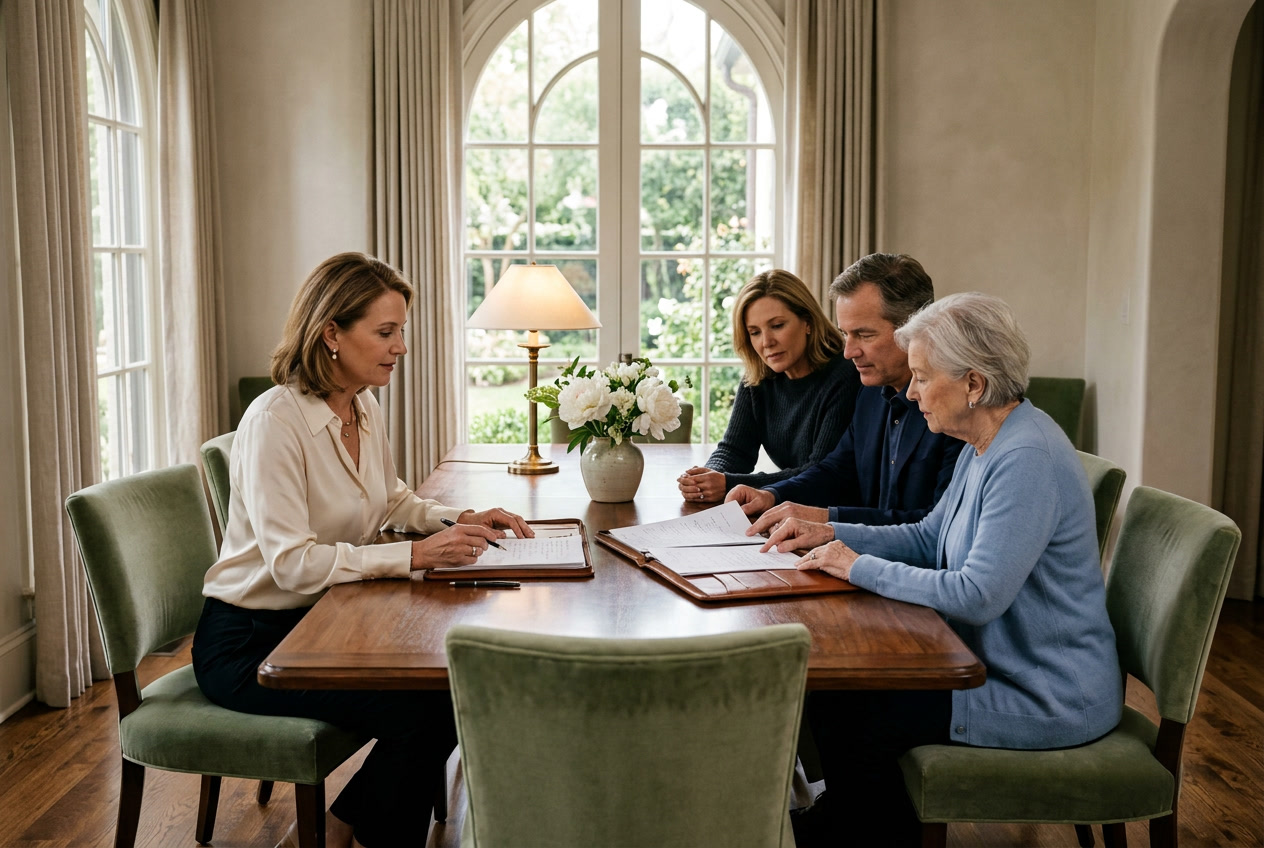
ALCA's standards ask the care manager to explain their role, responsibilities and scope of practice clearly, and to offer only services they have the skills and training for (ALCA Standards of Practice). They also say the older adult should be involved in decisions about their own life as far as possible. The person paying is often a relative; the person whose wishes lead the plan is the older adult.
How much does a geriatric care manager cost, and does Medicare pay?
Expect to pay privately, and get the fees in writing first. As a market figure, not WholeHealth's rates, ALCA's chief executive told KFF Health News in October 2026 that members charge $150 to $350 an hour, with big geographic variations. ALCA says fees may not be covered by insurance.
What the sources say about cost and coverage
ALCA says “rates vary by location and experience, and may not be covered by insurance,” and that fees should be given to you in writing before services start (ALCA). Billing differs: some care managers bill weekly, some monthly, some when the work is done, and most also charge out-of-pocket expenses such as mileage (ALCA).
The care management Medicare.gov describes is different from hiring a private care manager. Part B may pay for a doctor or other health care provider “to help manage your care for serious chronic conditions,” with a care plan, 24/7 access for urgent needs and a medicine review; you pay coinsurance after the Part B deductible (Medicare.gov). Ask the person's own doctor whether they offer it.
WholeHealth Concierge is private pay and does not bill Medicare or insurance. We do not publish rates; we talk through the hours and the plan in a free consultation. For paying for care at home, see how to pay for in-home care in California and long-term care insurance for home nursing.
How do you choose a geriatric care manager?
Ask about credentials, experience with situations like yours, fees in writing, emergency cover and who else they work for, then check what you are told. ALCA publishes its own list of questions, and the license and membership can both be verified for free.
Questions from ALCA's guide to selecting a care manager (ALCA):
- Credentials. What is your experience, and what professional credentials do you hold?
- Fit. What are your areas of expertise? Do you regularly handle situations like ours?
- Practice. Are you a solo practitioner or part of a larger practice? How long have you done this work?
- Fees. Is there a fee for the first consultation, and what does continued care cost? Will you put it in writing?
- Cover. Are you available for emergencies? How do you communicate with clients and families?
- Independence. Does your company also provide home care services? Can you provide references?
WholeHealth Concierge provides RN-led care management and also coordinates private duty nursing, so you should know both before you decide.
Then verify. Check a California nursing license on the DCA License Search; the Board of Registered Nursing says the data there is primary source data from its licensing system (California BRN). Check ALCA membership with the Member Verification Form on ALCA's certification page.
Where does WholeHealth Concierge fit?
WholeHealth Concierge offers RN-led care management for families in Orange County, Los Angeles, Riverside and San Bernardino counties. It is private pay and does not bill Medicare or insurance. Our nurses monitor, coordinate, teach, report and advocate; diagnosis and prescribing stay with the person's physician.
The service page explains how it works: geriatric care manager in Orange County and Los Angeles. Meagan Williams, RN, BSN, CCRN holds California RN license 95328380, which you can check on the DCA License Search. Families often start with a hospital stay (hospital discharge planning), a diagnosis (dementia care coordination), or a legal or fiduciary need (for attorneys and fiduciaries).
Geriatric care managers, answered.
Common questions families ask, with a source for each answer.
What is an Aging Life Care Professional?
It is ALCA's name for a geriatric care manager. ALCA describes the role as a guide and advocate for families caring for older relatives or disabled adults. Only ALCA members may use the trademarked terms Aging Life Care Professional and Aging Life Care Manager (ALCA).
Is an elder care manager or senior care manager the same thing?
Often the job is similar, but the titles are used loosely. ALCA notes that care professionals may call themselves consultants, managers, advisors or something else (ALCA). Ask what license and certification the person holds, and check it.
Is a geriatric care manager a nurse?
Sometimes. ALCA lists counseling, gerontology, mental health, nursing, occupational therapy, physical therapy, psychology and social work as backgrounds (ALCA). If you want a registered nurse running the plan, ask, and check the license on the DCA License Search.
What certifications should a geriatric care manager have?
ALCA's Advanced Professional members must hold one of four: Care Manager Certified (CMC), Certified Case Manager (CCM), Certified Advanced Social Work Case Manager (C-ASWCM) or Certified Social Work Case Manager (C-SWCM) (ALCA). A state license, such as an RN license, is separate and is checked with the state.
What is a certified geriatric care manager?
Usually someone who holds one of the certifications ALCA approves, such as CMC or CCM. ALCA's Advanced Professional level also requires a degree in a related field and supervised experience in the field within the last ten years (ALCA).
How do I check a care manager's license or membership?
For a California RN, use the DCA License Search; the Board of Registered Nursing says its data there is primary source data (California BRN). For ALCA membership, use the Member Verification Form on ALCA's certification page.
What is the difference between a geriatric care manager and an RN care manager?
The work is the same; the license differs. An RN care manager is a registered nurse doing geriatric care management. In California, an RN may observe signs and symptoms, judge whether they are abnormal, and report, refer or start emergency procedures (California BRN).
What is the difference between a geriatric care manager and a hospital case manager?
A hospital case manager is part of the hospital's team and helps plan the discharge. Aging life care managers work for the client and the family paying them, not for hospitals or insurance companies (KFF Health News). Our guide to the RN care manager and the hospital case manager sets out who does what.
What is the difference between a geriatric care manager and a patient advocate?
ALCA says its members differ from patient advocates, senior advisors, senior navigators and elder advocates, and must meet its education, experience and certification requirements and its Code of Ethics (ALCA). See what a patient advocate does.
Is a geriatric care manager the same as home health?
No. Medicare home health is part-time or intermittent skilled care for people who are homebound, ordered by a provider and given by a Medicare-certified agency (Medicare.gov). A geriatric care manager plans and coordinates, and can help oversee home health. See concierge nursing vs. home health.
Does a geriatric care manager provide hands-on care?
Generally not. KFF Health News describes aging life care managers as coordinators, not hands-on caregivers (KFF Health News, 2026). Hands-on nursing comes from a nurse; see private duty nursing.
How much does a geriatric care manager cost?
Market figure, not WholeHealth's rates: ALCA's chief executive told KFF Health News in October 2026 that members' hourly rates range from $150 to $350, with big geographic variations (KFF Health News). ALCA says fees should be given to you in writing before services start (ALCA).
Does Medicare pay for a geriatric care manager?
Plan on paying privately, and ask. ALCA says fees may not be covered by insurance (ALCA). The care management Medicare.gov describes is chronic care management, which Part B may pay for when a doctor or other health care provider manages care for 2 or more serious chronic conditions (Medicare.gov).
Does long-term care insurance pay for a geriatric care manager?
It depends on the policy. Read the policy's benefit wording or ask the insurer in writing before you start. Our guide to long-term care insurance for home nursing covers what to ask.
When should a family hire a geriatric care manager?
When caregiving has become overwhelming, ALCA says, for example when the person has several medical problems, cannot live safely at home, or has little family support, or when the family disagrees or lives far away (ALCA).
Can a geriatric care manager help if we live far away?
Yes. ALCA lists a family that does not live close by among the reasons to call one, and says that for families who live at a distance, a care manager can be a 24/7 emergency contact (ALCA).
Does a geriatric care manager work for the family or for the older adult?
Both, and the older adult's wishes come first where they can. ALCA's Standards of Practice say care managers should promote the client's self-determination and involve the client in decisions that affect their life (ALCA).
What if my loved one refuses help?
Keep the person in the decision. ALCA's standards say to involve the client as far as possible, to evaluate decision-making capacity if it is in question, and, if the person cannot decide, to see that decisions are made by whoever has the legal authority (ALCA).
What happens at the first assessment?
The care manager asks why you are seeking help and meets everyone involved, in person or virtually. ALCA suggests bringing all the relevant information, then asking what resources the situation will take, what the alternatives are, and the pros and cons of each (ALCA).
What should the written agreement include?
ALCA says it should spell out the services, the fee and expense arrangements, how often you are billed, and how services end. Ask about mileage, travel time and any outside professionals before they are brought in (ALCA).
How long do families work with a geriatric care manager?
It varies with the situation. Some families want one assessment and a written plan; others want ongoing monitoring through a progressive illness. ALCA suggests asking up front how services are ended (ALCA).
Does WholeHealth Concierge offer geriatric care management in Orange County?
Yes. WholeHealth Concierge provides RN-led care management across Orange County, Los Angeles, Riverside and San Bernardino counties. It is private pay and does not bill Medicare or insurance. See geriatric care manager in Orange County and Los Angeles, or call (213) 298-3288 for a free 15-minute consultation.
Sources
Every page below was opened and read on October 25, 2026. The date in parentheses is the date the source itself shows.
- Aging Life Care Association. What is Aging Life Care? What you need to know (no date shown).
- Aging Life Care Association. Selecting an Aging Life Care Professional (no date shown).
- Aging Life Care Association. Certification and Professional Conduct (no date shown).
- Aging Life Care Association. Working with an Aging Life Care Professional (no date shown).
- Aging Life Care Association. Standards of Practice and Code of Ethics (page says updated November 2024; the linked PDF says revised May 2026).
- California Board of Registered Nursing. An Explanation of the Scope of RN Practice, NPR-B-03 (revised January 2011).
- California Board of Registered Nursing. License Verification (no date shown).
- Medicare.gov. Home health services (no date shown).
- Medicare.gov. Chronic care management services (no date shown).
- Medicare.gov. Long-term care (no date shown).
- Paula Span. Aging Life Care Managers Can Be a Godsend for Families. KFF Health News, The New Old Age (October 14, 2026).
Our scope. WholeHealth Concierge provides nursing care and care coordination. Diagnosis, prescribing and treatment decisions stay with the person's physician or other licensed prescriber. This page is general information, not medical, legal or financial advice for any one person.
Not sure whether you need a care manager yet?
A free 15-minute call with a registered nurse is usually enough to tell. If you do not need care management, we will say so.