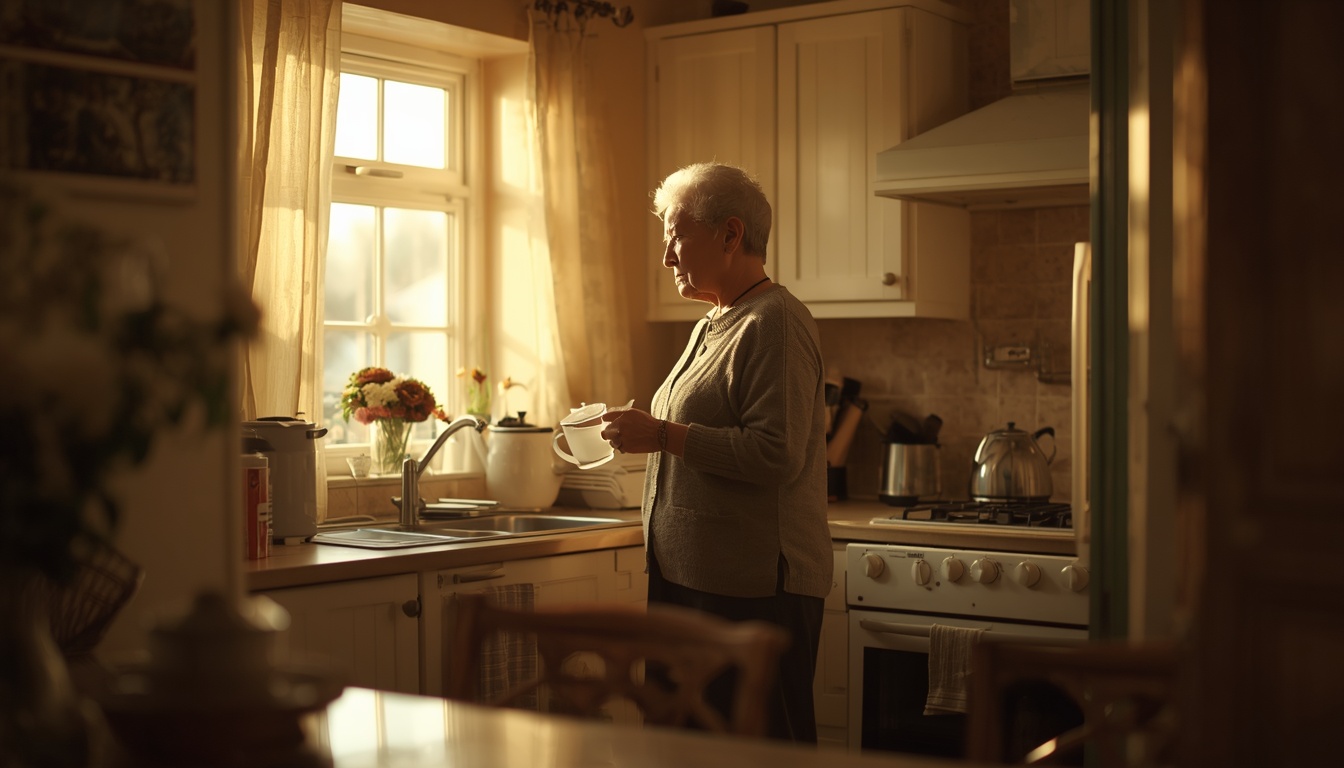
There is no single test, and there is no single person who decides. If your parent has decision-making capacity, your parent decides, and a competent adult is legally entitled to make choices their family considers unwise. What a family can do is find out, specifically and in writing, what is actually happening in that house, fix what is fixable, and be honest about what is not.
The useful question is almost never “can she live alone.” It is “what would have to be true for her to keep living alone safely, and can we make those things true?” For most families the answer turns out to be a package of small changes rather than a move, and the families who ask the second question tend to buy their parent years of independence that the first question would have ended early.
What follows is written for the adult child and for the parent, in the expectation that both will read it. Ending someone’s independence is one of the heaviest things a family can do to a person, and it is done badly far more often than it is done too late. The goal here is not to build a case. It is to look clearly, name what is genuinely dangerous, separate that from what is merely different from how you would live, and know what your actual options are.
It is also worth knowing at the outset how ordinary this arrangement is. According to the Administration for Community Living’s Profile of Older Americans, about 28 percent of older adults living in the community live alone, roughly 16 million people. Among older women the figure is 33 percent, and among women aged 75 and over it is 42 percent. Living alone is not a warning sign, and it is not unusual. Most of those people are managing perfectly well, which is precisely why the question worth asking is a specific one about this person and this house rather than a general one about age.
What actually makes living alone unsafe?
Start here, because most family arguments are about the wrong thing. A cluttered house, an odd diet, a strange schedule, a refusal to answer the phone, none of these are safety problems. They are preferences you dislike. Safety problems are specific, and they share a structure: something that could reasonably happen, that the person cannot recover from on their own, with nobody there to intervene. Living alone is not itself the hazard. Living alone with an unmanaged hazard and no way to summon help is the hazard.
The categories below are the ones that actually cause harm to older adults at home. Notice how many of them are engineering problems rather than moving problems.
Falling and not getting up
The fall is rarely the worst part. Lying on the floor for hours because nobody is there and the phone is on the counter is what causes the real damage.
Medication errors
Doses doubled, doses skipped, discontinued drugs still taken, several prescribers who do not see each other’s lists. Silent, common, and it lands people in the hospital.
Cooking and fire
A burner left on, a pan forgotten, a smoke alarm that has been silenced because it kept going off. Older adults are far more likely to die in a home fire than the general population.
Getting lost
Wandering on foot or in the car. This one is genuinely different in kind, because it takes the person outside any protection the home provides.
No way to summon help
The common thread under most of the others. A chest pain, a fall, a stroke, a fire, each becomes catastrophic mainly through delay.
Not eating or drinking enough
Shopping stops, cooking stops, appetite and thirst both fade with age. Weight loss and dehydration cause falls, confusion and hospital admissions.
Chronic conditions unmanaged
Heart failure, diabetes, COPD and kidney disease all require daily self-management. When that quietly stops, the decline is fast and often looks like something else.
Financial exploitation
The risk that most reliably ends independence, because it removes the money that pays for staying home, and it is often invisible until it is large.
Falls are the one everyone names, and they name the wrong part of it. The CDC reports that more than one in four older adults falls each year, that older adult falls generate roughly three million emergency department visits annually, and that the age-adjusted fall death rate rose 21 percent between 2018 and 2024, from 64.7 to 78.4 per 100,000. It is going the wrong way, not the right one.
For someone living alone, though, the injury is only half the problem. The other half is the long lie: being on the floor, unable to get up, for hours. In the classic study of this, published in JAMA in 1993, 47 percent of older adults who had a fall without injury reported being unable to get themselves up afterwards. A later prospective study of people over ninety, published in the BMJ in 2008, found that 82 percent of falls happened when the person was alone, that 80 percent of those who fell were unable to get up after at least one fall, and that 30 percent had lain on the floor for an hour or more. And an older British study of falls at home found that of the people who lay on the floor for more than an hour, half died within six months.
That is the number to hold on to. Not the fall. The hour on the floor, and who is there. A long lie is what turns a survivable fall into dehydration, muscle breakdown, pressure injury, hypothermia and a hospital admission, and it is the one hazard on this list that is caused directly by living alone rather than merely made worse by it.
Medications are the quietest hazard and one of the most consequential. More than four in ten adults aged 65 and over now take five or more prescription medications, roughly double the share twenty years ago. Every additional drug adds interactions, side effects and one more thing to get right at the right time of day. A landmark analysis in the New England Journal of Medicine estimated nearly 100,000 emergency hospitalizations a year in the United States for adverse drug events among adults 65 and older, and nearly half of those were in people aged 80 and over.
Here is the part that changes how you should think about it. Four ordinary medications accounted for two thirds of those hospitalizations: warfarin, insulins, oral antiplatelet agents and oral diabetes medications. Drugs formally flagged as high-risk or inappropriate for older adults accounted for barely one percent. The danger is not exotic prescribing. It is necessary medication taken wrong, by someone managing it alone, with several prescribers who cannot see each other’s lists. The American Geriatrics Society publishes the Beers Criteria, most recently updated in 2023, as a tool for reviewing medications in older adults, and it is a reasonable thing to ask a physician or pharmacist to run through. But the higher-yield question is simpler: is the person actually taking what everyone thinks they are taking?
Cooking and fire deserve more weight than families give them. According to the National Fire Protection Association, cooking causes 44 percent of reported home structure fires, and unattended equipment is the leading contributing factor, involved in 28 percent of cooking fires and 48 percent of cooking fire deaths. Ranges and cooktops account for 88 percent of cooking fire deaths, and more than a quarter of the people killed in cooking fires were asleep when they were fatally injured.
Age multiplies all of it. US Fire Administration data puts the relative risk of dying in a fire at 2.2 times the general population for ages 65 to 74, 2.9 times for 75 to 84, and 3.4 times for 85 and over. The signal to look for at home is not dramatic. It is scorched pot bottoms, a burned dish towel, a microwave that has quietly become the only appliance in use, and above all a smoke alarm that has been disabled because it kept sounding. Automatic stove shut-off devices and induction cooktops exist precisely for this, and they are unglamorous, inexpensive and effective.
Wandering and getting lost is different in kind from the others, because it takes the person outside the home and outside every protection the home offers. The Alzheimer’s Association reports that six in ten people living with dementia will wander at least once, many of them repeatedly, and that many people who wander are found within a mile and a half of where they went missing.
The driving version of the same problem is getting lost on a familiar route, which is a serious signal even once. Californians should know how this works legally, because most people do not. Under Health and Safety Code section 103900, a physician who diagnoses a disorder characterized by lapses of consciousness, which by statute includes Alzheimer’s disease and related disorders severe enough to be likely to impair the ability to drive, must report it to the local health officer, who reports it to the DMV. This is mandatory, not discretionary. The DMV then evaluates: someone with mild dementia may keep driving after passing a special driving evaluation, with re-examination in six to twelve months, while the DMV states that drivers with moderate to severe dementia are not eligible for re-examination because it is no longer safe for them to drive.
If driving is the fight in your family, remember that what is actually being defended is not the car but the life the car provides. Arranging transport before removing the keys changes the conversation completely.
Not eating and drinking enough is the hazard that hides inside all the others. A national study using the Mini Nutritional Assessment found that around a quarter of older adults are at risk of malnutrition. Appetite and thirst sensation both decline with age, the kidney becomes less able to concentrate urine, and total body water falls, so the margin for error narrows on both sides. Shopping and cooking are also complex tasks, which puts them among the first to quietly stop.
Unintentional weight loss is a genuine clinical red flag. The threshold most often used clinically is five percent or more of body weight over six to twelve months; five percent inside a single month is the more urgent version of the same signal. Either warrants an evaluation rather than reassurance, because in adults over sixty presenting with unintentional weight loss, more than one in ten turns out to have a cancer. Dehydration, meanwhile, does not present as thirst. It presents as being unsteady, tired and confused, which families reliably read as decline, and which frequently reverses with fluids. Note the loop that creates: dehydration causes confusion and falls, a fall alone becomes a long lie, and a long lie causes further dehydration. Several of the hazards on this page feed each other.
Unmanaged chronic conditions cause a slower version of the same thing. Heart failure, diabetes, COPD and kidney disease all depend on daily self-management: weighing, testing, adjusting, and knowing when a symptom means call someone. When that quietly stops, the deterioration is fast and it usually presents as something else, a fall, confusion, or an emergency admission that nobody saw coming. The tell is often the calendar rather than the person. Prescriptions not refilled, specialists not seen, a home blood pressure log that stops mid-page.
Financial exploitation belongs on a safety list even though it is not a physical hazard, because it is the risk that most reliably ends independence. It removes the money that pays for the support that keeps someone at home, and it is frequently invisible until the loss is large. The FBI’s Internet Crime Complaint Center recorded 201,266 complaints from people aged 60 and over in 2025, reporting $7.75 billion in losses and an average loss of $38,500, with more than 12,000 people losing over $100,000 each. California led the country on both counts. Those are reported figures, and reporting is understood to be a fraction of the real total, because the shame of it keeps people quiet.
Two honest qualifications. First, the Federal Trade Commission’s own analysis finds that older adults report losing money to fraud at a lower rate than younger adults. They lose more per incident, not more often, and the picture of the gullible elderly is not what the data shows. Second, and more important for this page: a new vulnerability to scams in someone who was previously sharp is a clinical signal, not only a financial one. A prospective study published in the Annals of Internal Medicine in 2019 followed 935 older adults free of dementia and found that lower scam awareness was associated with a significantly increased risk of later developing Alzheimer’s dementia and mild cognitive impairment, and with greater Alzheimer’s pathology at autopsy, even after adjusting for overall cognitive function. The authors are explicit that the measure is too weak to predict anything for an individual. The practical reading is not “he was scammed, therefore he has Alzheimer’s.” It is that a parent who has always been careful with money and suddenly is not has given you a reason to talk to their doctor.
The related and better-established point is that the ability to manage finances is among the earliest complex daily tasks to slip in mild cognitive impairment, with medication management close behind. If you are looking for the earliest observable change, look at the checkbook before you look at the conversation.
Now look at that list again and notice the pattern. Falls, medications, fire, nutrition, chronic disease management and financial risk are all substantially reducible without anybody moving house. Only wandering, and an advanced loss of the ability to recognize danger at all, tend to genuinely outrun what can be engineered into a home. That distinction is the practical core of this whole question, and it is the reason the middle options further down deserve more of your attention than the decision everyone is dreading.
A 15-minute call with a Registered Nurse will tell you which of these hazards are actually present, which are fixable at home, and whether a formal look is warranted yet.
What warning signs should I look for when I visit?
Families are usually looking at the wrong thing. They watch how the conversation goes, because that is what they can see, and conversation is the last function to fail. Meanwhile the house is telling the truth. The signs below are observable, they do not require a clinical background, and they can be gathered on an ordinary visit without turning it into an inspection.
A few ground rules before you start. One sign is a data point, not a verdict, and every one of these has innocent explanations. Look for clusters and for change over time, which is why it helps to write down what you see rather than trust your memory of the last visit. Do not go through drawers and cabinets without saying what you are doing. And if you are only visiting once a year, expect to see the accumulated change of a year and to over-react to it. Ask a neighbor or a sibling who visits monthly whether this is new.
The person
Physical changes are the least deniable and the most often explained away, by everyone, including the person.
- Clothes fitting differently, a belt on a new notch, rings turning on the finger, a face that has thinned
- Clothes that are visibly not clean, or the same outfit on consecutive days when that was never their habit
- Hair, nails or shaving neglected in someone who always minded their appearance
- Body odor, or a strong smell of urine in the home or on clothing
- Bruising, especially on forearms, hips, knees or the side of the head, and particularly any bruise they cannot explain or explain vaguely
- New difficulty rising from a chair, reaching for furniture while walking, or a hand on the wall down the hallway
- Skin tears, an unhealed cut, or a burn on the hand or forearm
- Dry mouth, cracked lips, or feeling drowsy and confused later in the day
The kitchen
The kitchen is the single most informative room in the house, because eating is daily, and because it is where fire risk lives.
- Spoiled food in the refrigerator, or food well past its date that has simply been left
- Almost nothing in the refrigerator, or nothing that requires cooking
- A freezer full of the same single item, which usually means shopping has narrowed to what is easy
- Scorch marks on pot bottoms, a burned pan in the sink, or a ruined dish towel
- Burn marks on the stove surround, the microwave interior or the countertop
- A smoke alarm that has been removed, unplugged, or has a dead battery
- Groceries bought repeatedly, six of the same item, which suggests they do not remember shopping
- Dishes accumulating in a house that was always tidy
Medications
This is the area where a quiet problem does the most damage, and the one where counting takes ten minutes and tells you a great deal.
- Bottles from more than one pharmacy, or duplicate bottles of the same drug with different fill dates
- Pill counts that do not match the fill date, either far too many left or far too few
- Expired prescriptions still in the rotation, and discontinued drugs still in the cabinet
- A pill organizer that is filled inconsistently, or filled and untouched
- Medications stored in several places, the bathroom, the nightstand, a kitchen drawer, the car
- Over-the-counter sleep aids, antihistamines or pain relievers being used daily alongside prescriptions
- An answer of “I take a little white one” when you ask what a medication is for
Mail, money and paperwork
Managing money is one of the first complex tasks to slip, often well before anything else looks wrong, and it is also where exploitation shows up.
- Unopened mail in stacks, particularly anything from a bank, an insurer or a utility
- Shut-off notices, second notices, or a utility that has actually been cut off
- Checks written incorrectly, a check register that stops mid-page, or bills paid twice
- An unusual volume of solicitations, sweepstakes mail, charity appeals or religious mailers, which is a marker that their name has been sold onto a list
- New names on accounts, a new joint account holder, or a new person who is “helping with the finances”
- Cash withdrawals or gift-card purchases that do not fit their habits
- A new friend, contractor, caregiver or romantic interest who has become central quickly
- Reluctance or embarrassment when money comes up in a family that used to discuss it openly
The house itself
A home changes to accommodate a decline before anyone admits the decline. Look for the accommodations.
- A bed made up on the sofa or in a downstairs room, which usually means the stairs have become a problem
- Rooms that are no longer used at all, or a whole floor that has been abandoned
- Furniture arranged into a path, which is a walking aid nobody has named
- Burnt-out bulbs left unreplaced, especially in hallways, stairwells and bathrooms
- Loose rugs, extension cords across walkways, and clutter in the routes to the bathroom and the door
- Thermostat set very high or very low, or heating and cooling not being used at all
- Repairs undone in a house that was always maintained, and a garden that has stopped being tended
- Locks, keys or the door being handled oddly, keys left in the outside lock, doors left unlocked or unusually barricaded
Driving
The car is a written record. It is worth walking around it before you go inside.
- New scrapes on bumpers, wheel rims, mirrors or the garage door frame
- Damage they cannot account for, or that is attributed to a parking lot
- Driving that has quietly narrowed to daytime, familiar routes, or a two-mile radius
- Getting lost on a familiar route, even once
- Tickets, warnings or a near miss that a passenger mentions
- Other family members who have started avoiding riding with them
Routine, mood and connection
The pattern of a week says more than any single afternoon does.
- Activities dropped, a class, a church, a card game, a walking route, with a vague reason
- Friends they no longer mention, or a phone that no longer rings
- Calls not returned, or returned at strange hours
- Sleep inverted, awake much of the night and asleep through the afternoon
- Repeating a story within the same conversation, not across weeks
- Deflecting rather than answering, humor used to move past a question, or a spouse who now answers for them
- Withdrawal, irritability, or a flatness that is new
- Alcohol intake that has increased, or drinking that has become solitary and daily
Take the list with you, mark what you actually see, and date it. Two dated lists eight weeks apart are worth more than any single impression, and they are also what a physician can use. “Mom seems off” produces a fifteen-minute visit and a reassurance. “Here is what changed between June and August, in her house, written down” produces an evaluation.
Interpreting a set of observations is a clinical skill. Meagan will walk through what you wrote down, tell you what is worrying and what is not, and say plainly if nothing needs to change yet.
Is being unsafe the same as being unable to decide?
No, and this is the distinction almost nothing written on this subject explains properly. Three separate questions get collapsed into one, and collapsing them is how families end up either taking over a competent person’s life or standing by while someone who genuinely cannot decide comes to harm.
| The question | What it actually asks | Who answers it |
|---|---|---|
| Safety | What could go wrong here, how likely is it, and how bad would it be? | Anyone who looks carefully. A nurse, a physician, an occupational therapist, an observant family member. |
| Capacity | Can this person understand the decision in front of them, appreciate how it applies to them, reason about the options, and communicate a choice? | A clinician, for a specific decision, at a specific time. A court, if the question becomes a legal one. |
| Preference | Knowing all of that, what does this person want? | The person. Always, as long as they have capacity for the decision. |
Run them in that order and most families find their answer. A situation can be genuinely unsafe and the person can still have every right to stay in it. That is not a loophole. It is the ordinary condition of adult life. People ride motorcycles, live on boats, decline chemotherapy, and stay in houses with stairs. We do not take that away from anyone else on the grounds that a safer option exists, and age alone is not a reason to start.
Where families go wrong is in reasoning backwards: the choice looks unwise to me, therefore she must not be thinking clearly, therefore I should decide. That inference is not valid, and in a legal setting it is exactly the argument that fails. A poor decision is evidence of nothing on its own. It is worth being honest with yourself about which of the three questions you are actually asking, because “she cannot live alone” is very often a statement about the second and third question dressed up as a statement about the first.
What does decision-making capacity actually mean?
Capacity is the question of whether a person can make a particular decision. In everyday clinical use it is contrasted with competency, which is described as a court’s determination rather than a clinician’s. That distinction is genuinely useful to families, and it is worth knowing that even the researchers who built the standard framework treat the two words as overlapping in practice, because usage is not consistent in either medicine or law. So when someone tells you your mother “is not competent,” the right response is a question: who assessed her, for which decision, and when?
Clinically, capacity is assessed against four abilities, the framework set out by Paul Appelbaum and Thomas Grisso and now standard in the field: the ability to communicate a choice, to understand the relevant information, to appreciate the situation and its consequences for oneself, and to reason about the options. Appelbaum is explicit that the reasoning criterion is about process rather than result. Writing in the New England Journal of Medicine, he notes that the criterion “focuses on the process by which a decision is reached, not the outcome of the patient’s choice, since patients have the right to make ‘unreasonable’ choices.”
Read that again, because it is the whole argument. A person who understands they may fall, appreciates that it could be serious, has weighed that against what leaving would cost them, and says clearly that they are staying, has capacity for that decision. You may hate the answer. It is still their answer.
Two features of capacity are consistently missed by families and, honestly, by some clinicians.
- Capacity is decision-specific. There is no global on-off switch. Someone can lack the capacity to manage a complex investment portfolio and retain full capacity to decide where they live, or to consent to a cataract operation, or to refuse one. The bar rises with the consequences of the decision, not with the person’s diagnosis.
- Capacity fluctuates. It can be worse in the evening, worse during an infection, worse on a new sedating medication, worse after a poor night’s sleep, and substantially better once those are addressed. California law builds this in: Probate Code section 811(c) directs a court to consider “the frequency, severity, and duration of periods of impairment.” An assessment done in an emergency department at two in the morning during an acute illness is not a verdict on the rest of someone’s life.
What California law actually says
California addresses this by statute in the Due Process in Competence Determinations Act, and the language is unusually clear for a legal text. Three provisions matter to families.
- Probate Code section 810(a) establishes that “there shall exist a rebuttable presumption affecting the burden of proof that all persons have the capacity to make decisions and to be responsible for their acts or decisions.” The starting position is capacity, and the burden sits on whoever claims otherwise.
- Section 811(d) states that “the mere diagnosis of a mental or physical disorder shall not be sufficient in and of itself to support a determination that a person is of unsound mind or lacks the capacity to do a certain act.” A dementia diagnosis is not a finding of incapacity. The rest of section 811 requires evidence of a deficit in specific mental functions and evidence linking that deficit to the particular decision at issue.
- Section 813(b) puts the consequence plainly: “A person who has the capacity to give informed consent to a proposed medical treatment also has the capacity to refuse consent to that treatment.” Capacity is not something you have only when you agree.
The honest counterweight, because a page that only says “a diagnosis proves nothing” is telling half the truth: the same NEJM review reports that more than half of patients with mild to moderate dementia may have impaired decision-making capacity, and that incapacity is essentially universal in severe dementia. Both things are true at once. A diagnosis does not decide the question, and a diagnosis is a real reason to have the question properly assessed rather than assumed either way.
A formal capacity determination is a clinical and legal process. It involves a physician who knows the person or has properly evaluated them, usually with cognitive testing, a review of medications and reversible causes, and sometimes a neuropsychological evaluation or a geriatric psychiatry opinion. It is not a family vote, it is not something a sibling can declare over Thanksgiving, and it is not something a home care agency, a placement service or a nurse can pronounce.
Confusion from an infection, a new medication or dehydration looks identical to decline and is very often fixable. A nurse’s in-home assessment is built to separate the two before anyone makes an irreversible decision.
Who actually decides whether my parent can live alone?
There is a hierarchy here, and it is worth understanding in order, because families routinely try to jump to the bottom of it when the answer sits at the top.
-
The older adult, if they have capacity
This is the default and it holds until something specific displaces it. An adult with capacity decides where they live, what care they accept, who comes into their home, and what risks they are willing to run. California’s Health Care Decisions Law opens by affirming that “an adult has the fundamental right to control the decisions relating to his or her own health care,” and the presumption of capacity in Probate Code section 4657 applies until it is rebutted. No amount of family consensus overrides this, and neither does being right. If your parent has capacity and says no, the answer is no, and your work is persuasion, harm reduction, and staying in the relationship.
-
Their physician, for the clinical questions
The physician is the person who can evaluate cognition properly, rule out the reversible causes that mimic decline, diagnose dementia if that is what it is, adjust the medications that are contributing, and make a formal determination of capacity when one is genuinely needed. In California that is written into the statute: under Probate Code section 4658, unless a written advance directive says otherwise, the determination that a patient lacks or has recovered capacity “shall be made by the primary physician.”
Bring them evidence rather than worry: dated observations, the actual medication bottles, a description of function rather than personality. If the appointment is fifteen minutes and your parent presents well, ask for a longer visit specifically for a cognitive evaluation, or ask for a referral to geriatrics or neurology.
-
An agent under a power of attorney, if one exists and its terms are met
Many families believe that holding a power of attorney means they can now make decisions for their parent. It generally does not work that way, and California is specific about it. Under Probate Code section 4682, unless the document itself says otherwise, a health care agent’s authority “becomes effective only on a determination that the principal lacks capacity, and ceases to be effective on a determination that the principal has recovered capacity.” Note the second half. Authority switches off again when the person recovers, which is the statutory answer to the very common situation where someone was confused during an infection, a family member stepped in, and never stepped back out.
California’s statutory Advance Health Care Directive form makes this concrete. Its default is that the agent’s authority begins when the primary physician determines the person cannot make their own health care decisions, and there is a checkbox the person can mark to make the authority effective immediately instead. Most people who have signed one do not remember which way that box is set. It is worth looking.
A durable power of attorney for finances is a different instrument again, covering property and financial affairs rather than the person’s body, care or residence, and when it takes effect is governed by its own terms. Read the actual documents, and have an attorney read them. Assumptions about what a power of attorney allows are one of the most common and most expensive errors in this whole area.
-
A court, through conservatorship, and only as a last resort
If capacity is genuinely lost, no valid advance documents exist or reach the situation, and the person is at real risk, a court can appoint a conservator. This is a serious, adversarial, public proceeding that transfers decision authority away from an adult, and it should be the option you arrive at, not the option you start with. California sets the standard of proof for appointing a conservator at clear and convincing evidence, which is deliberately higher than the everyday civil standard.
Can I make my parent move?
If they have capacity, no. Not by consensus, not by persistence, not by holding a power of attorney, not by being the one who would have to manage the consequences.
Here is the clearest way to state the California position, and every part of it is statutory. No document a family holds gives anyone authority to make a decision-capable adult leave their home. A financial power of attorney conveys authority over property and money, not over a person’s residence. A health care agent’s authority does not begin until incapacity is determined, and capacity is presumed until then. The power to establish where another adult lives is a conservatorship power granted by a judge, and a judge may not grant a conservatorship at all unless the court makes an express finding that it is the least restrictive alternative, on clear and convincing evidence.
What you can do is real, and it is worth being clear about. You can decline to fund an arrangement you believe is unsafe. You can decline to provide care yourself, and you can be honest about the limits of what you will personally absorb. You can bring in a clinician for an objective assessment. You can report genuine abuse or neglect. You can change the environment in every way your parent will accept. What you cannot do is substitute your judgment for theirs while their judgment is legally intact.
If capacity is genuinely gone, the question becomes who holds authority, which sends you back up the ladder: the documents first, the court only if there are none or they do not reach.
Worth saying plainly, because families carry it badly: if you have looked honestly, offered everything reasonable, and your competent parent has chosen a level of risk you would not choose, and something later goes wrong, that is not your failure. It was their decision to make. Adult children routinely torture themselves over an outcome that was never theirs to control.
What is conservatorship, and when is it actually the answer?
A probate conservatorship is a court proceeding in which a judge appoints someone to act or make decisions for an adult who cannot do so for themselves. In California it comes in two forms that can be granted separately or together: conservatorship of the person, which covers care and where someone lives, and conservatorship of the estate, which covers finances and property.
A separate track, LPS conservatorship, exists under the Lanterman-Petris-Short Act for people who are gravely disabled as a result of a mental health disorder or severe substance use disorder. Families frequently ask about it and it is usually not the relevant route, for two reasons: it requires a qualifying mental health or substance use disorder rather than dementia, and a family cannot file for it. An LPS conservatorship is initiated by the professional in charge of a facility providing evaluation or intensive treatment, not by relatives. Which track, if any, applies to a particular situation is a question for an attorney.
What conservatorship actually involves
Be clear-eyed about it. The petition is filed publicly and notice must go to the person’s spouse or partner and relatives. A court investigator personally interviews the proposed conservatee, interviews the petitioner and family, gathers medical reports, informs the person of their right to oppose the petition, to attend the hearing, to a jury trial and to be represented by counsel, and files a written report with the court before the hearing. The person can contest it. Once granted, oversight continues: the investigator visits again at six months, at one year, and periodically after that, and at the annual review is required to discuss less restrictive alternatives.
On cost, the figures worth trusting are the ones the state publishes. The statewide filing fee for a petition to appoint a conservator is $435, a petition for temporary letters of conservatorship is $60, and there is a court investigator fee set by each individual court rather than statewide. Notably, an opposition filed by or on behalf of the proposed conservatee carries no fee, and fee waivers exist. Attorney fees are separate, are not set by the state, and vary widely, and they generally run higher if anyone objects. Anyone quoting you a confident all-in number without seeing the case is guessing.
One common misconception is worth correcting, because it cuts the other way. Conservatorship does not erase a person. The Judicial Council’s own notice form tells conservatees they keep the right to be represented by a lawyer, to ask a judge to replace the conservator or end the conservatorship, to make or change a will, to receive and control their salary, and to control a personal allowance. Rights to receive mail, to vote, to marry, to receive visitors and to make their own medical decisions are retained unless the court specifically orders otherwise. What is lost in a conservatorship of the person is day-to-day authority over one’s own care, custody and residence, which is more than enough to take seriously without exaggerating it.
The presumption that they stay home
This surprises most families and it deserves to be better known. A conservator of the person can establish the conservatee’s residence within California without asking the court first, but is required to select the least restrictive appropriate residence, and California law presumes that the person’s own personal residence at the time the proceedings began is the least restrictive appropriate residence. That presumption can only be overcome by clear and convincing evidence. Conservatorship is not a mechanism for moving someone into a facility. Even after a court has transferred the authority, the law still starts from the position that they stay home.
The alternatives you have to rule out first
California requires you to look elsewhere before you look to a court. Probate Code section 1800.3(b) is direct about it: a conservatorship “shall not be granted by the court unless the court makes an express finding that the granting of the conservatorship is the least restrictive alternative needed for the protection of the conservatee.” The statute then tells the court what to weigh, including supported decision-making agreements, powers of attorney, health care surrogate designations and advance health care directives. The California Courts self-help guide lists the same set for families: supported decision-making, a power of attorney, an advance health care directive, a representative payee for Social Security, a special needs trust or CalABLE account, and a guardian ad litem.
The situations where conservatorship genuinely is the answer tend to share a shape: capacity is clearly and durably gone, no valid advance documents exist or the ones that exist are being abused, there is real and ongoing harm, and often someone else is exercising undue influence. If that describes your family, see an elder law attorney rather than working from a website. If it does not, almost everything else on this page is a better first move, and it is also the cheaper and kinder one.
Contemporaneous clinical documentation of function, medication use and home safety is what turns a family’s account into evidence. Meagan works alongside elder law counsel and fiduciaries, and does not provide legal advice or capacity determinations.
What does a registered nurse assessment actually tell you?
When a family cannot agree, or cannot see clearly, or needs something a physician will actually read, the useful intervention is a structured in-home assessment by a registered nurse. It is worth being precise about what that produces, because it is frequently oversold.
A nurse comes to the home, spends two to three hours there, and looks at the things that only show up in the home. Function is assessed by watching rather than asking: how someone rises from a chair, how they move down a hallway, whether they can get in and out of the shower, whether they can manage the stairs they say they manage. Medications are reconciled against the bottles that are physically present, which regularly reveals duplicates, discontinued drugs still being taken, and a list that no longer matches what any prescriber believes. Cognition is screened with a validated tool. Nutrition, hydration, weight and skin are assessed directly. The environment is walked room by room, including lighting, flooring, bathroom, stairs, egress, smoke and carbon monoxide alarms, water temperature and the actual path someone takes to the toilet at three in the morning.
What comes out of it is a written document: what was observed, what the specific risks are, which of them can be engineered away and how, what needs a physician’s attention, and what a realistic support plan looks like at several different intensities. That document is the thing families are usually missing. It converts an argument between siblings into a set of facts, it gives a primary care physician something concrete to act on rather than a worried phone call, and if the situation ever does reach an attorney, it is contemporaneous clinical documentation rather than recollection.
What a nurse does not do. A registered nurse does not determine legal capacity, does not diagnose dementia, and does not decide where anyone lives. A nurse observes, measures, screens, documents and advises. Diagnosis belongs to a physician. Legal capacity and competency belong to a physician’s formal determination or to a court, depending on what is being decided. Anyone who offers to tell you whether your parent is “competent” after an afternoon in the house is describing something they cannot deliver.
Meagan Williams is a California-licensed Registered Nurse (BSN, CCRN-certified critical care background, license 95328380) working as an independent nurse care manager. In this kind of situation her role is the assessment, the written report, the conversation with the family, and the coordination with the person’s own physician and, where appropriate, their attorney. She is hired by the family and is not paid by any facility or agency she might suggest, which matters here more than in almost any other context, because the industry that most eagerly answers this question is the industry that is paid when the answer is “move.” See what a geriatric care manager does for how the ongoing coordination role works once a plan exists.
WholeHealth Concierge is a private-pay care management practice and does not bill Medicare. It is not a home care organization or a home health agency, and it does not place or staff caregivers.
An in-home assessment by a Registered Nurse produces a document your family, your parent and their physician can all work from. Start with a free 15-minute call.
What are the options between living alone and moving?
This is the part of the topic that is most badly served online, because the pages that rank are largely written by operators of the thing they are recommending. The middle is wide, it is where most families actually land, and the runway it buys is measured in years rather than months. Almost nobody starts here, and almost everybody should.
The right way to use the list below is not to pick one. It is to take the specific risks you identified and match a countermeasure to each, then re-check in three to six months. A stack of four modest interventions usually outperforms one dramatic one, costs less, and does not require anyone to give anything up.
Home modification
Grab bars, a shower seat, a handheld shower, raised toilet seat, stair rails on both sides, threshold ramps, non-slip flooring and removing the rugs. The single highest-yield category, and the least intrusive.
Lighting
Motion-activated night lighting on the route to the bathroom, brighter bulbs in stairwells and hallways, and a lamp reachable from the bed. Cheap, invisible, and it removes a large share of night-time falls.
A way to call for help
A medical alert pendant, a fall-detecting watch, or a phone that is genuinely carried. The point is not the device, it is that being on the floor for eight hours becomes being on the floor for twenty minutes.
Medication systems
Pharmacy blister packs or pre-sorted pouches by dose time, a locking or alarmed dispenser, synchronized refill dates, and one pharmacy instead of three. Removes the most common failure point entirely.
Kitchen and fire safety
Stove shut-off timers or automatic stove guards, an induction hob, a microwave-first routine, and working smoke and carbon monoxide alarms with ten-year sealed batteries.
Food
Home-delivered meals, grocery delivery with a standing order, or a family member who cooks and freezes. Solves nutrition without solving it through a move.
Scheduled human contact
A daily call at a fixed time, a neighbor with a key, a standing Tuesday visit. Structured contact catches deterioration early and is the cheapest monitoring that exists.
Part-time in-home support
A few hours a week for shopping, laundry, transport, bathing or companionship, scaling up as needed. Most families discover the ceiling is much higher than they assumed.
Adult day programs
Structured daytime programs with activity, meals, socialization and in some cases nursing oversight. Addresses isolation and daytime supervision in one step, and gives a spouse or child respite.
Transport
Volunteer driver programs, paratransit, rideshare set up on a family member’s account. The thing that makes giving up the keys survivable rather than isolating.
Technology
Video doorbells, remote thermostats, water-leak sensors, automatic bill pay, a simplified phone, and passive activity sensors for families who want monitoring without cameras.
Financial guardrails
A second set of eyes on the accounts, transaction alerts to a trusted family member, a credit freeze, and taking the name off marketing lists. Prevents the loss that ends independence fastest.
Which of these actually has evidence behind it
Not equally, and a page that pretended otherwise would not be worth much. Here is the honest ranking.
Home modification is the best-evidenced intervention on the list, with an important condition attached. A 2023 Cochrane review of 22 trials covering 8,463 community-dwelling older people found that home fall-hazard interventions reduced the rate of falls by about 26 percent overall, and by 38 percent in people specifically selected for higher fall risk, that second figure carrying high-certainty evidence. The condition is the interesting part: in people who were not selected for fall risk, the same review found no effect at all, also with high certainty. Grab bars do not help a robust 68-year-old. They help a great deal for someone who has already fallen in the past year, has been in the hospital recently, or needs help with daily activities. If that describes your parent, this is the intervention with the strongest claim on your attention and money.
Structured programs that combine a clinician with a handyman have real trial evidence. The CAPABLE program, developed at the Johns Hopkins School of Nursing, sends an occupational therapist, a registered nurse and a home-repair worker into the home over about five months to work on goals the older adult chooses. In a randomized trial published in JAMA Internal Medicine, it produced roughly a 30 percent reduction in daily-activity disability at five months. Later work has been more mixed, including a 2025 trial in recently hospitalized patients that did not show the same benefit, so treat it as promising and well-founded rather than proven in every population. The transferable lesson is that combining the person and the house works better than addressing either alone.
Medical alert devices are the option most oversold and the least supported. A nurse should say this plainly. Randomized evidence that a personal emergency response system reduces anxiety, fear of falling or return emergency visits is weak to absent. Worse, the same over-nineties study that produced the long-lie figures found that call alarms were widely available and were not used in most of the falls that resulted in someone lying on the floor for a long time. People did not wear them, could not reach them, were too shaken to press them, or had decided the device was not for them.
None of that means skip it. It means the pendant is not the intervention, being found is the intervention. Design for that: automatic fall detection rather than a button that has to be pressed, a device that is genuinely worn because it looks like a watch, a daily call at a fixed time so that a missed call means something, a neighbor with a key, and a conversation with your parent about why they would or would not press it, which is the step almost every family skips.
Home-delivered meals sit in between. The nutritional problem they address is real and documented. The evidence that they reduce hospitalizations or nursing home placement is not established, and pages that claim otherwise are usually citing a qualitative study. What a meal delivery reliably provides, beyond the food, is a person appearing at the door every weekday, which is a wellness check with a sandwich attached.
California programs worth knowing about
Three specific ones, because families in this state routinely miss them.
- Community-Based Adult Services (CBAS) is California’s adult day health program, a Medi-Cal managed care benefit that includes nursing, therapy, personal care, therapeutic activity, a meal and transport to and from the person’s home. Eligibility is decided by the person’s Medi-Cal managed care plan and is based on functional and care needs rather than diagnosis. It replaced the older Adult Day Health Care program, which is what many families are still searching for by name.
- In-Home Supportive Services (IHSS) pays for in-home help for Californians who are aged, blind or disabled and at risk of out-of-home placement. The important qualifier, and the one that catches most families: IHSS is a Medi-Cal program and is only available to people with Medi-Cal coverage. If your family is private-pay, this is not your route.
- PACE, the Program of All-Inclusive Care for the Elderly, serves people aged 55 and over who meet the nursing home level of care but can still live safely in the community, wrapping medical care, day programs, therapy and transport into one program. It is available in much of California, though not everywhere, and the state paused applications from new PACE organizations in late 2025, so the map of what exists is unlikely to expand for the next couple of years. Check whether an existing program covers your parent’s ZIP code.
None of these is a substitute for a plan, and eligibility rules change. They are worth checking before anyone concludes that the only affordable option is a move. Families also arrive here with an assumption about Medicare that does not hold up, and it is worth correcting before you build a budget on it: our guide to what Medicare does and does not cover for in-home dementia care sets out where the gap actually falls.
Two practical notes. First, sequence matters. Put in the things that require no admission of decline before you ask for the things that do, because early wins make later conversations possible. Second, someone has to own the list. The reason these packages fail is almost never that they were the wrong interventions; it is that nobody was responsible for arranging them, checking they were actually being used, and adjusting them when the situation changed. That ownership is either a family member with real time, or it is the job you hire out. Our guide to choosing private nursing at home covers how to tell which level of paid support a situation actually calls for.
How do I start this conversation without a fight?
Most of these conversations fail in the first sentence, and they fail for a predictable reason: the adult child opens with a conclusion. “Dad, we need to talk about you not being able to stay here.” That sentence tells a competent adult that the decision has already been made, that he was not part of making it, and that the rest of the conversation is a negotiation over how gracefully he surrenders. He will fight it, and he is right to.
What works is slower and less satisfying. Open with something you observed rather than something you concluded, ask rather than tell, and be genuinely willing to hear an answer you did not expect. Bring one topic, not seven. Do not bring your siblings and stage it as an intervention, which reliably produces a defended person rather than an honest one. And pick the time deliberately: not immediately after a hospital stay when everyone is frightened, not at a holiday meal, and not on the phone.
Openings that tend to work
- Start from their goal, not yours
- “I know staying in this house matters to you. I want that too. Can we talk about what would make it work for another five years?” This puts you on the same side of the table, and it is also true.
- Name one observation, then stop talking
- “I noticed the bed is made up downstairs. Are the stairs bothering you?” One specific thing, asked as a question, is far harder to deflect than a general concern, and far less insulting.
- Ask what they would want to happen
- “If you fell in the night and could not get to the phone, what would you want to happen?” Most people have thought about this and have never been asked. The answer often opens the door to a medical alert device that they would have refused if you had suggested it.
- Make it about you
- “I worry between visits and it is affecting me. Would you be willing to do something that would let me stop worrying?” Framing the request as a favor to you rather than a concession by them changes what they are agreeing to.
- Borrow the doctor
- “Would you be willing to raise the dizziness with Dr. Chen at your next visit? I can come and take notes if that helps.” Many older adults will accept from a physician what they will not accept from a child, and this also respects that the clinical question belongs with the clinician.
- Trade rather than take
- “What if we stopped the night driving, and I arranged rides so you do not lose the Thursday group?” Every ask should come with something that protects what the change threatens. A restriction that removes a life is refused. A restriction that preserves the life is often accepted.
Three things to avoid. Do not argue with a memory, because you will not win and they will remember the humiliation longer than the point. Do not use the word “we” when you mean “you” and both of you know it. And do not make a promise you may not be able to keep, particularly “I will never put you in a home,” which sounds like love and later becomes the thing that makes an honest conversation impossible.
Also expect this to take several conversations. Families often treat the topic as a single meeting with a decision at the end. It is a series of small, low-stakes exchanges over months, each of which moves slightly. That is not failure. It is how an adult changes their mind about something that matters to them.
What if my father refuses help?
This is the most searched part of this topic and the least honestly answered, because the honest answer is uncomfortable: if he has capacity, he is allowed to refuse, and there is no lever that changes that. Refusal is not evidence of impairment. Plenty of people refuse help for reasons that are entirely coherent, including cost, pride, privacy, a bad experience with a previous helper, fear that accepting one thing starts a slide toward all of it, or a settled view that they would rather take a risk at home than be safe somewhere else. Before treating refusal as a problem to be solved, find out which of those it is, because the response is different for each.
Then work the ground that is actually available. There is usually more of it than families think.
- Find out what specifically is being refused. “No caregivers” often means “no stranger bathing me,” which is compatible with someone coming to cook and drive. People refuse categories and accept specifics.
- Shrink the ask. Two hours on a Tuesday for the shopping is a much smaller thing to agree to than “help.” Once someone is in the house and has turned out to be pleasant, the hours tend to grow on their own.
- Attach it to a task, not to a deficit. Someone coming to help with the garden and the errands is a service. Someone coming because you cannot cope is a judgment. Same person, entirely different proposition.
- Use a trial with an end date. “Try it for a month and if you hate it we stop” is far easier to accept than a permanent arrangement, and it is a promise you must actually keep if you want any credibility for the next ask.
- Change who asks. A physician, a grandchild, a pastor, a sibling with less history, or a peer who already uses the same service will sometimes succeed where the primary adult child cannot. This is not manipulation. It is recognizing that the relationship is part of the resistance.
- Take the changes they will accept. Grab bars, better lighting, a shower seat, a medication organizer and a stair rail do not require anyone to admit anything, and they remove real risk. Take the win.
- Separate the non-negotiable from the merely worrying. Driving with a documented dementia diagnosis, or a stove being left on repeatedly, is not the same category as a messy house. Spend your influence on the first kind. Families lose the ability to be heard on the things that matter by fighting about the things that do not.
- Write down what you offered and what was declined. Not to build a case, but because if the situation deteriorates, a dated record of the conversations is what lets a physician, a care manager or an attorney understand the trajectory rather than the crisis.
And accept, out loud and to yourself, that a competent person may choose a level of risk you would not choose. This is called dignity of risk, and it is a real principle in geriatric care rather than a consolation prize. The alternative view, that safety outranks everything, would justify moving almost every person over eighty out of their home, and it is not how any of us live our own lives. Your job is to make the risk as small as it can be made without taking the life away, to be honest about what you can and cannot absorb yourself, and to stay in the relationship. A parent who has been fought with for two years will not call you when something finally goes wrong. A parent who has been listened to will.
There is a real limit to this, and it is worth naming clearly. Dignity of risk applies to the person who understands the risk and accepts it. It does not apply when the person cannot appreciate the risk, when the risk falls on someone else, such as a spouse who is being neglected or drivers on the road, or when what is happening is not a choice at all but exploitation by someone else. Those situations are covered further down.
A neutral clinician can often say the thing a family member cannot, and be heard. Meagan is frequently brought in for exactly this, and works with the older adult directly rather than around them.
When does this stop being a discussion and become urgent?
Everything above assumes you have time. Sometimes you do not. The situations below are not part of the slow conversation about independence, and treating them as though they were is how families lose someone while still being respectful.
Call 911 or get an urgent medical evaluation the same day
- A sudden change in thinking or alertness. Confusion that came on over hours or a few days, new disorientation, seeing things that are not there, unusual drowsiness or agitation. This is delirium until proven otherwise. It is a medical emergency with a treatable cause underneath it, and it is not what dementia looks like, because dementia does not arrive over a weekend.
- Any sign of stroke. Face drooping, arm weakness, speech difficulty, sudden vision loss, sudden severe headache, sudden loss of balance. Note the time it started and call 911.
- A fall with a head strike, particularly in anyone taking a blood thinner, and any fall they cannot fully account for.
- A long lie. If they were on the floor for hours before being found, they need evaluation even if they say they feel fine.
- Chest pain, breathlessness at rest, or a sudden inability to stand or walk.
- Signs of dehydration or a medication reaction, including very dark urine, no urine output, new unsteadiness, or unexplained bleeding or bruising on an anticoagulant.
Report it, do not investigate it yourself
- Suspected physical abuse, including unexplained bruising in a pattern, injuries that do not match the explanation, or fear of a specific person.
- Suspected financial exploitation, including a new person with account access, large or unusual transfers, a newly changed will or power of attorney, or gift-card and wire-transfer activity.
- Neglect by a caregiver, including untreated wounds, being left without food, medication, heat or supervision.
- Self-neglect that has become dangerous, such as a home that is no longer habitable, no food, no working utilities, or wounds and illness going untreated in someone refusing all help. California folds self-neglect into its statutory definition of neglect, which covers “the negligent failure of an elder or dependent adult to exercise that degree of self care that a reasonable person in a like position would exercise,” including where that failure results from poor cognitive functioning, mental limitation, substance use or chronic poor health. It is reportable.
You do not need proof, and you are not making an accusation. You are asking a trained investigator to look. If you work in healthcare, social services, law enforcement, or care of elders in California, you are a mandated reporter and the obligation is legal, not optional.
“It is probably just a UTI” is not a safe place to stop
This deserves its own note, because it is the most common wrong turn taken with sudden confusion in an older adult. There is a real association between urinary tract infection and delirium; a 2021 meta-analysis of 29 studies covering more than 16,000 people found the odds of delirium roughly two and a half times higher in the presence of UTI. But bacteria in the urine without symptoms is extremely common in older adults and is a different thing entirely. A 2024 systematic review in the Journal of the American Geriatrics Society looked at older adults who had bacteria or pus cells in the urine but no fever, no instability and no urinary symptoms, and found no evidence that antibiotics improved their delirium. Two of the four studies reported outcomes that were worse.
The practical consequence for a family: if someone becomes suddenly confused, a urine sample is sent, and it comes back positive, that is not automatically the answer and antibiotics are not automatically the treatment. Sudden confusion needs a real evaluation, because the cause is very often something else, a new medication, a missed dose, dehydration, pain, low oxygen, constipation, or a head injury from a fall nobody witnessed. That last possibility is exactly why this page exists. An older person living alone who becomes acutely confused may have fallen and struck their head with nobody there to see it.
What Adult Protective Services can and cannot do
Families are often surprised by this, so it is worth setting out before you call. California’s APS program operates in all 58 counties, serves adults aged 60 and over as well as dependent adults aged 18 to 59, is free, and does not depend on income. It responds to reports of suspected abuse or neglect, investigates, and arranges services from community agencies.
What it cannot do is compel a competent adult. Welfare and Institutions Code section 15636 provides that any victim of elder or dependent adult abuse “may refuse or withdraw consent at any time to an investigation or the provision of protective services,” and that the agency “shall act only with the consent of the victim unless a violation of the Penal Code has been alleged.” Where the person is so incapacitated that they cannot give or withhold consent, the statute points to a court petition for a temporary conservatorship, not to an APS order. APS is not a placement agency and cannot move anyone.
That is not the agency failing you. It is the same principle that runs through this entire page. What a report does accomplish is real: a trained professional lays eyes on the situation, an official record exists, and where capacity is genuinely in question the county has pathways a family does not.
One further note, since this page is written by a nurse. Registered nurses are “health practitioners” under California law and are therefore mandated reporters of suspected elder and dependent adult abuse under Welfare and Institutions Code section 15630, along with physicians, social workers, care custodians, clergy and law enforcement. A report must be made immediately or as soon as practicable by phone, with a written report within two working days. That is worth knowing in advance rather than discovering afterwards.
A note on what this page is. This is general education written by a registered nurse. It is not medical advice about any particular person, and it is not legal advice. Capacity, powers of attorney, advance health care directives and conservatorship are legal matters that turn on the specific documents and facts of your family’s situation, and California law may have changed since this page was published. For clinical questions, speak with the person’s physician. For anything involving capacity, decision-making authority or conservatorship, speak with a California elder law attorney. WholeHealth Concierge does not provide legal advice, legal representation, or legal capacity determinations.
Frequently asked questions
How do I know if my mom can still live alone?
Look at function rather than conversation, because conversation is the last thing to fail. On your next visit check the kitchen for spoiled food and scorched pans, count the pills against the fill dates, look for unopened mail and shut-off notices, walk around the car for new damage, and notice whether a bed has appeared downstairs. Write down what you see and date it, then compare it to another dated list six to eight weeks later. A cluster of changes across several areas matters far more than any single sign, and a dated record is what a physician can actually act on.
Does a dementia diagnosis mean my parent cannot live alone?
No. A diagnosis is not a determination of incapacity, and California law says so directly. Probate Code section 811 provides that the mere diagnosis of a mental or physical disorder is not sufficient in and of itself to support a determination that a person lacks capacity, and section 810 starts from a rebuttable presumption that all persons have capacity. Many people live alone safely for years after a diagnosis, with support built around the specific things that have become difficult. What changes the answer is not the diagnosis but the presence of a hazard the person can no longer recognize or recover from, such as leaving the stove on repeatedly or getting lost. That said, the honest counterweight matters too: published clinical evidence indicates that more than half of people with mild to moderate dementia have some impairment of decision-making capacity, and that incapacity is essentially universal in severe dementia. A diagnosis does not settle the question, and it is a good reason to have the question properly assessed rather than assumed in either direction.
Can I make my parent move out of their home?
Not if they have decision-making capacity. A competent adult has the legal right to make choices that others consider unwise, including staying in a home their family considers risky. In California, no document a family holds gives anyone that authority: a financial power of attorney covers property and money rather than a person’s residence, and a health care agent’s authority does not begin until incapacity has been determined. The power to establish where another adult lives is a conservatorship power granted by a judge, and a conservatorship cannot be granted unless the court makes an express finding that it is the least restrictive alternative, on clear and convincing evidence. You can decline to fund an arrangement you believe is unsafe and be honest about the limits of the care you will personally provide, but you cannot substitute your judgment for theirs.
What is the difference between being unsafe and lacking capacity?
They are separate questions. Safety asks what could go wrong and how likely it is, and anyone who looks carefully can assess it. Capacity asks whether the person can understand a specific decision, appreciate how it applies to them, reason about the options, and communicate a choice. A person can be in a genuinely unsafe situation and still have full capacity to choose to stay in it. Reasoning backwards from a decision you dislike to a conclusion that the person must be impaired is not valid, and it is the argument that fails in a legal setting.
Does having power of attorney let me decide where my parent lives?
Usually not in the way families assume. Under California Probate Code section 4682, unless the document says otherwise, a health care agent’s authority becomes effective only on a determination that the principal lacks capacity, and it ceases to be effective on a determination that the principal has recovered capacity. Section 4658 puts that determination with the primary physician. California’s statutory Advance Health Care Directive form defaults to that arrangement, with a checkbox the signer can mark to make the agent’s authority effective immediately instead, and most people do not remember which way their box is set. A durable power of attorney for finances is a different instrument again, covering property and money rather than the person’s residence. Neither document lets an agent force a decision-capable person to move. Read the actual documents and have a California elder law attorney read them with you.
What do I do if my father refuses help?
Find out what specifically is being refused, because “no caregivers” often means “no stranger bathing me” and is compatible with someone coming to cook and drive. Shrink the ask to a few hours a week, attach it to a task rather than to a deficit, offer a trial with a real end date you will honor, and consider changing who does the asking, since a physician or a grandchild often succeeds where the primary adult child cannot. Take the changes he will accept, such as grab bars, better lighting and a medication organizer, because they remove real risk without requiring him to admit anything.
What are the options between living alone and moving into a facility?
There are many, and most families underestimate how much runway they buy. Home modifications such as grab bars, stair rails and better lighting, a medical alert device so a fall does not become eight hours on the floor, pharmacy blister packs or an alarmed dispenser for medications, stove shut-off devices, home-delivered meals or grocery delivery, scheduled daily check-in calls, part-time in-home support for a few hours a week, adult day programs, transport services, and financial guardrails such as transaction alerts and a credit freeze. The right approach is to match a countermeasure to each specific risk you identified rather than to pick one option, and to have one person responsible for making sure it is all actually in place.
When should I call Adult Protective Services in California?
Call when you suspect physical abuse, financial exploitation, neglect by a caregiver, or self-neglect that has become dangerous, such as a home that is no longer habitable or untreated wounds and illness in someone refusing all help. In California the statewide number is 1-833-401-0832, available 24 hours a day, seven days a week; you enter the person’s five-digit ZIP code and the call routes to their county office. The program operates in all 58 counties, serves adults aged 60 and over as well as dependent adults, and is free regardless of income. You do not need proof, only a concern. Be aware of the limit: Welfare and Institutions Code section 15636 lets a victim refuse or withdraw consent to an investigation or to protective services at any time, and requires the agency to act only with the person’s consent unless a Penal Code violation has been alleged. A report brings assessment and an official record rather than a guaranteed intervention, and APS cannot move anyone.
Can a nurse decide whether my parent has capacity?
No. A registered nurse can assess function, screen cognition with a validated tool, reconcile medications, evaluate nutrition and skin, assess the home environment room by room, and produce written documentation of all of it. That documentation is often what allows a physician to act. But diagnosis belongs to a physician, and a formal determination of capacity is a clinical and legal process rather than something a nurse, a care manager, a home care agency or a family can pronounce. Anyone offering to tell you whether your parent is competent after an afternoon in the house is describing something they cannot deliver.
Sources. Fall statistics from the U.S. Centers for Disease Control and Prevention; long-lie findings from Tinetti et al. (JAMA, 1993), Wild, Nayak & Isaacs (BMJ, 1981) and Fleming & Brayne (BMJ, 2008). Medication data from Budnitz et al. (New England Journal of Medicine, 2011) and the American Geriatrics Society 2023 Beers Criteria. Fire data from the National Fire Protection Association (2017, 2021 data) and the U.S. Fire Administration. Wandering data from the Alzheimer’s Association. Capacity framework from Appelbaum (New England Journal of Medicine, 2007). California law: Probate Code sections 810 to 813, 1800.3, 1801, 2352.5, 4657, 4658, 4682 and 4701; Health and Safety Code section 103900; Welfare and Institutions Code sections 15610.57, 15630 and 15636; and the California Courts self-help guide on conservatorship and its alternatives. Home-modification evidence from Clemson et al., Cochrane Database of Systematic Reviews, 2023. Living-alone prevalence from the Administration for Community Living Profile of Older Americans. Figures and statutes change. Check the primary source before relying on any number here, and see the note above about what this page is and is not.