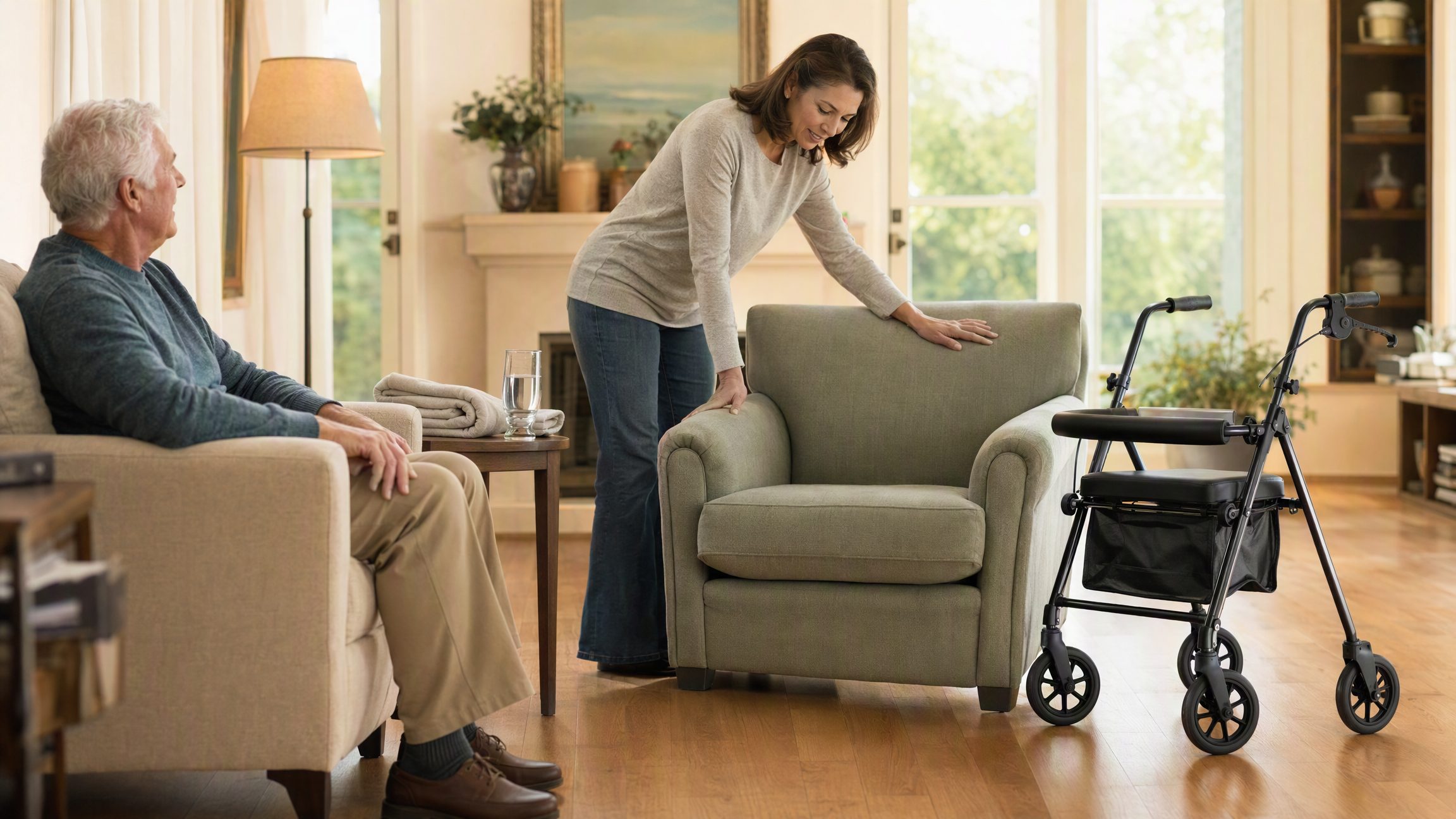
- Most people resume normal daily activities within 3 to 6 weeks after a hip or knee replacement (AAOS).
- AAOS says to expect help for several weeks with cooking, shopping, bathing and laundry.
- With recommended prevention, symptomatic blood clots before discharge happened after 1.09% of knee and 0.53% of hip replacements in a review of 47 studies (JAMA, 2012).
- Infection of the new joint was recorded in 2.0% to 2.4% of hip and knee replacements in US hospital data, 2001 to 2009 (Journal of Arthroplasty, 2012).
- AAOS lists a persistent fever higher than 100°F taken by mouth among the signs of infection. Use the number your surgeon gives you.
In this article
- What does the knee and hip replacement recovery timeline look like at home?
- Why do the first weeks need the most help?
- How do you lower the risk of blood clots after a joint replacement?
- What are the signs of infection in a new joint?
- What should you avoid in the first weeks?
- When should you call the surgeon, and when should you call 911?
- Who does what during recovery at home?
- What do the sources agree on, and where do they differ?
- Where can Orange County and Los Angeles families get help?
- Who is WholeHealth Concierge?
- Frequently asked questions
- Sources
What does the knee and hip replacement recovery timeline look like at home?
Most people return to normal daily activities within 3 to 6 weeks; the first weeks are the most hands-on, and full recovery from a knee replacement can take about a year. Your surgeon's plan sets the actual pace.
Getting ready before the operation and the hospital stay itself are covered in going home after a hip or knee replacement.
What usually happens, stage by stage
- Week 1Help at home with cooking, shopping, bathing and laundry. A walker, crutches or cane for every trip until the surgeon says otherwise. Clot prevention exactly as prescribed. Pain medicines on a written schedule. A stable chair with a firm seat.
- Week 2Exercises as the surgeon's plan sets out. The incision checked daily and kept dry until it has sealed. Stitches or staples often come out about 2 weeks after a hip replacement.
- Weeks 3 to 6Most people resume normal daily activities. Most people drive again about 4 to 6 weeks after a knee replacement. Hip precautions for sitting, bending and sleeping usually last the first 6 weeks.
- After 6 weeksHip dislocation risk stays highest for the first few months. Some pain with activity and at night is common for several weeks after a knee replacement, and full knee recovery takes about a year.
An illustration of a typical course, not a clinical plan. Sources: AAOS OrthoInfo, Total Knee Replacement and Total Hip Replacement; Cleveland Clinic, Knee Replacement. In an emergency, call 911.
AAOS, the national academy of orthopedic surgeons, says on its OrthoInfo patient site that most people can resume most normal activities of daily living within 3 to 6 weeks after a knee replacement, and most normal light activities within 3 to 6 weeks after a hip replacement (AAOS, knee; AAOS, hip). Cleveland Clinic says it usually takes around a year to recover fully after a knee replacement (Cleveland Clinic). Our page on post-surgery nursing at home in Orange County covers how recovery at home is planned before the operation.
What the sources say about the weeks after a joint replacement
Figures describe the patients each source covers and may not match your loved one's operation or health.
Why do the first weeks need the most help?
Walking is new, the walker goes everywhere, and the clot prevention and pain medicine schedule is busiest. AAOS says to expect help for several weeks.
AAOS says you will need help for several weeks with cooking, shopping, bathing and laundry after a knee replacement, and may need some help with the same tasks after a hip replacement. It advises using a cane, crutches, a walker or handrails, or having someone help, until balance, flexibility and strength improve, and suggests a stable chair with a firm seat cushion early in recovery (AAOS, knee; AAOS, hip).
Pain medicines add a second reason to have someone close. The FDA warns that combining opioid pain medicines with benzodiazepines or other central nervous system depressants, including alcohol, can cause extreme sleepiness, slowed or difficult breathing, coma and death (FDA, August 31, 2016).
How do you lower the risk of blood clots after a joint replacement?
Use the clot prevention your surgeon prescribes exactly as directed, move as the surgeon allows, and know the signs of a clot in the leg and in the lung.
A review of 47 studies covering 44,844 patients who received recommended clot prevention found symptomatic clots before hospital discharge after 1.09% of knee replacements and 0.53% of hip replacements (Januel and colleagues, JAMA, 2012). Those were in-hospital rates; the risk continues after discharge, which is why prevention goes home with you. AAOS says the surgeon may prescribe support stockings or a blood thinner, and may continue the blood thinner started in the hospital through the first several weeks of recovery (AAOS).
AAOS lists increasing pain in the calf, tenderness or redness of the calf or around the knee, and new or increasing swelling of the leg, ankle or foot as warning signs of a clot in the leg, and sudden shortness of breath or sudden chest pain as signs that a clot may have reached the lung (AAOS, knee; AAOS, hip). The CDC says signs of a clot in the lung need medical help immediately (CDC, March 2025).
What are the signs of infection in a new joint?
A persistent fever, chills, and increasing redness, tenderness, swelling or drainage at the incision; call the surgeon right away, because a joint infection is uncommon but serious.
In US hospital data from 2001 to 2009, infection of the new joint was recorded in 2.0% to 2.4% of hip and knee replacements, and the rate rose over time (Kurtz and colleagues, Journal of Arthroplasty, 2012). AAOS lists a persistent fever higher than 100°F taken by mouth, chills, increasing redness, tenderness or swelling of the wound, drainage from the wound, and, after a hip replacement, increasing hip pain with both activity and rest (AAOS, knee; hip). Write down the fever number your surgeon gives you.
What should you avoid in the first weeks?
Bending a new hip too far, low seats that put the knees above the hips, and soaking the incision before it has sealed.
- After a hip replacement: AAOS recommends chairs and pillows that keep the knees lower than the hips, advises against bending the new hip too far, and says special precautions for sitting, bending and sleeping usually last the first 6 weeks; the risk of dislocation is greatest in the first few months (AAOS).
- After either: AAOS advises avoiding soaking the wound in water until it has thoroughly sealed and dried (AAOS).
When should you call the surgeon, and when should you call 911?
Call the surgeon right away for a persistent fever, calf pain or leg swelling, or changes at the incision; get emergency help for sudden chest pain or trouble breathing.
Get emergency help now, or call the surgeon
- Sudden shortness of breath or trouble breathing
- Sudden chest pain, or chest pain with coughing
- Coughing up blood, a racing or irregular heartbeat, or fainting
- Very hard to wake after a pain medicine dose
- A persistent fever higher than 100°F by mouth, or your surgeon's number, or chills
- Increasing calf pain, tenderness or redness of the calf, or new swelling of the leg, ankle or foot
- Increasing redness, tenderness or swelling of the wound, or drainage from it
- Hip pain that keeps increasing, with activity and at rest, after a hip replacement
Sources: AAOS OrthoInfo, Total Knee Replacement and Total Hip Replacement; CDC, About Venous Thromboembolism (March 2025: seek medical help immediately for clot-in-the-lung signs); FDA, opioid and benzodiazepine warning (August 2016). Your surgeon's instructions come first. If in doubt, call 911.
Who does what during recovery at home?
Four roles share the first weeks: the surgeon, the physical therapist, the nurse and the family.
Four roles in the first six weeks
Sources: AAOS OrthoInfo, Total Knee Replacement and Total Hip Replacement; California Board of Registered Nursing, An Explanation of the Scope of RN Practice (NPR-B-03, revised 2011).
What do the sources agree on, and where do they differ?
They agree on three to six weeks for daily activities and on the warning signs; timing for stitches differs by joint, and no study we found tests whether a private nurse at home changes recovery.
Where the guidance matches, differs or is missing
Our reading of the sources listed below. Research on these groups is about those studies, not a measure of any one provider's results. WholeHealth Concierge is not affiliated with Cleveland Clinic or AAOS.
Where can Orange County and Los Angeles families get help?
Both counties run a free information line for older adults and caregivers that can point to in-home help and caregiver support in your area.
- Orange County: the OC Office on Aging Information and Assistance line, (714) 480-6450. Its online directory lists caregiver support, in-home care and legal aid.
- Los Angeles County: the Aging and Disabilities Department Information and Assistance hotline, 1 (800) 510-2020, serving older adults, dependent adults and adults with disabilities.
- Nurse licenses: the state's license search shows whether a nurse's license is current and any discipline.
- An emergency: call 911.
Who is WholeHealth Concierge?
WholeHealth Concierge is a private-pay concierge nursing practice serving families across Orange County, Los Angeles and the Inland Empire, and it does not bill Medicare.
Our founder, Meagan Williams, holds California RN license 95328380. You can look it up on the state's license search.
Every plan starts with a free 15-minute phone consultation. Read more about post-surgery nursing at home in Orange County, or call (213) 298-3288.
Frequently asked questions
How long is hip replacement recovery?
Most people resume normal light activities of daily living within 3 to 6 weeks, according to AAOS OrthoInfo, the patient site of the national academy of orthopedic surgeons. It also says the risk of dislocation is greatest in the first few months while the tissues heal, and that special precautions for sitting, bending and sleeping usually last the first 6 weeks.
When can I drive after a knee replacement?
AAOS says most people resume driving about 4 to 6 weeks after knee replacement surgery. Ask your surgeon first, especially while you are taking pain medicines.
When can the incision get wet after a hip or knee replacement?
Only when your surgeon says so. AAOS advises avoiding soaking the wound, or getting it wet, until it has thoroughly sealed and dried.
When do stitches or staples come out after a hip or knee replacement?
AAOS says stitches or staples are removed about 2 weeks after a hip replacement and several weeks after a knee replacement; deep stitches under the skin do not need removal. Your surgeon's office sets the date.
What can you never do again after a knee replacement?
Most surgeons advise against high-impact activities such as running, jogging and jumping for life, AAOS says. Kneeling can be uncomfortable, but AAOS says it is not harmful.
How do I talk to WholeHealth Concierge about care after a hip or knee replacement in Orange County?
WholeHealth Concierge is a private-pay concierge nursing practice serving families across Orange County, Los Angeles and the Inland Empire, and it does not bill Medicare. Planning starts with a free 15-minute phone consultation at (213) 298-3288.
Sources
Statements on this page come from the public sources below, each opened and checked on the date shown. Journal studies were read as their published abstracts. This page is general information; your surgeon's instructions come first. WholeHealth Concierge provides nursing care and coordination; diagnosis and prescribing stay with your physicians and other licensed prescribers.
- AAOS OrthoInfo, "Total Knee Replacement" (no review date shown). orthoinfo.org. Accessed November 5, 2026.
- AAOS OrthoInfo, "Total Hip Replacement" (no review date shown). orthoinfo.org. Accessed November 5, 2026.
- Januel JM et al., "Symptomatic in-hospital deep vein thrombosis and pulmonary embolism following hip and knee arthroplasty among patients receiving recommended prophylaxis: a systematic review," JAMA, 2012. pubmed.ncbi.nlm.nih.gov. Accessed November 4, 2026.
- Kurtz SM et al., "Economic burden of periprosthetic joint infection in the United States," Journal of Arthroplasty, 2012. pubmed.ncbi.nlm.nih.gov. Accessed November 4, 2026.
- Centers for Disease Control and Prevention, "About Venous Thromboembolism (Blood Clots)," March 5, 2025. cdc.gov. Accessed November 4, 2026.
- U.S. Food and Drug Administration, "New Safety Measures Announced for Opioid Analgesics, Prescription Opioid Cough Products, and Benzodiazepines," August 31, 2016. fda.gov. Accessed November 4, 2026.
- Cleveland Clinic, "Knee Replacement" (WholeHealth Concierge is not affiliated with Cleveland Clinic). my.clevelandclinic.org. Accessed November 4, 2026.
- California Board of Registered Nursing, "An Explanation of the Scope of RN Practice Including Standardized Procedures," NPR-B-03, revised January 2011. rn.ca.gov (PDF). Accessed November 1, 2026.
- County of Orange, OC Office on Aging. officeonaging.oc.gov. Accessed November 4, 2026.
- Los Angeles County Aging and Disabilities Department. ad.lacounty.gov. Accessed November 4, 2026.
- California Department of Consumer Affairs, License Search. search.dca.ca.gov. Accessed November 1, 2026.